
The phone rang at 11 PM. My colleague Rajeev’s voice crackled through the line with barely contained excitement. “We’re doing it! We finally booked Kashmir!”
For months, we’d been planning this trip trading stories we’d heard from friends, scrolling through countless photos of Dal Lake at sunrise, debating whether three days would be enough. “But wait,” I’d asked him, “how many days are required for a Srinagar trip to really see everything?”
“Trust me,” he said, “I found the perfect itinerary. Three nights, two full days. Just enough to fall in love with the place without rushing.”
He was right. What followed was one of the most memorable weekends of our lives, a carefully crafted journey through mist-covered lakes, centuries-old gardens, and streets that smelled of kahwa and fresh-baked sheermal. If you’ve been wondering whether a 2 nights 3 days Srinagar itinerary can capture the essence of Kashmir’s beauty, let me tell you it absolutely can. And I’m here to show you exactly how.
Here is a well-prepared itinerary for your Do-It-Yourself trip for 3 Nights, 2 Days in Srinagar
Kashmir and Srinagar are lands of innocence and beauty. Topping it all, it is a wave that transports you to its trickling lucidity.
There is no better place to experience a trip to Kashmir than Srinagar, where artificial and natural wonders form its lifeline. Moreover, it is a place nestled quietly with no added artificial flavors or layers. It is this simplicity that entices everyone.
Remember when they say Kashmir is beautiful, do not exclude the men, women and children. People most importantly are hospitable, respectful and angelic here – all of them.
Although to experience the grandeur of Kashmir even a lifetime is less, if you want to touch base upon the most famous things without getting distracted, Srinagar is open to show you its colors, people, practices, cultures and much more.
You can plan 3 nights 2 days in Srinagar after/before your trek to Tarsar Marsar, Kashmir Great Lakes Trek or Gangabal Lake Trek. I understand you will be tight on time and budget. So, here is a 3 nights 2 days in Srinagar itinerary that will give you the taste of Srinagar, just the way you want it.
Quick Srinagar Trip Overview
Best for: First-time visitors, weekend travelers, pre/post-trek stopover
Ideal Duration: 3 nights, 2 full days
Budget: ₹8,000-15,000 per person (excluding travel)
Best Time: April to October (ideal), December-January (for snow)
Must-Do Experiences: Shikara ride, Mughal Gardens, houseboat stay, Kashmiri Wazwan
How Many Days Required to Visit Srinagar?
One of the most common questions travelers ask is: “How many days are required for a Srinagar trip?” The answer depends on what you want to experience:
Duration Options Explained:
2-3 Days (Weekend Trip):
Perfect for experiencing Srinagar’s highlights including Dal Lake, Mughal Gardens, and local sightseeing. This is ideal for those who want a quick getaway or are combining their visit with a nearby trek.
4-5 Days (Comfortable Exploration):
Allows you to explore Srinagar leisurely plus take day trips to Gulmarg (47 km) or Pahalgam (95 km). You’ll have time to soak in the culture without rushing.
7+ Days (Comprehensive Kashmir Tour):
Best for covering Srinagar, Gulmarg, Pahalgam, and Sonmarg. This gives you the complete Kashmir experience with adventure activities like skiing, trekking, and extensive sightseeing.
For this guide, we’re focusing on the optimal 3 nights, 2 days Srinagar itinerary – perfect for working professionals, students on break, or anyone looking for a meaningful weekend escape that doesn’t require extensive vacation days.
Why 2 Days in Srinagar Works Perfectly:
- Covers all major attractions without rushing
- Budget-friendly (fewer hotel nights)
- Ideal pre/post-trek relaxation period
- Sufficient to experience Kashmiri culture and cuisine
- Easy to plan with long weekends
- Manageable for all age groups and fitness levels
Travelling to the Main City
Getting to Srinagar: Your Complete Transport Guide
The Srinagar airport is 10 km from the main city. There are many options to reach the main town for your Kashmir road trip.
Bus: If you are a budget traveller or travelling solo, take a JKSRTC bus from the airport directly.
Cab: If you are travelling with your family, take a cab instead. The taxi service is standard for all, and you have to pay at the counter. According to the number system, you would get a cab that will accompany you to the city.
Auto: Both these are sure shot and thug free systems. If unluckily, both of these are unavailable, take an auto.
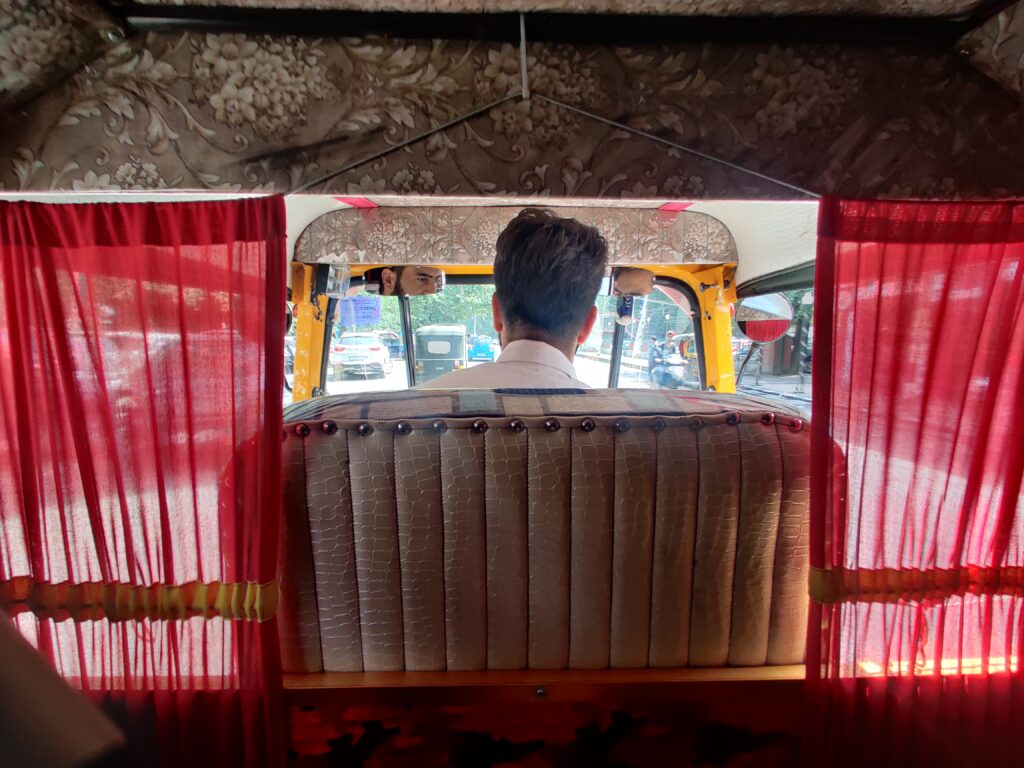
Transport Details & Costs:
From Srinagar Airport to City Center:
- JKSRTC Bus: ₹50-100 per person, runs every 30-45 minutes
- Pre-paid Taxi: ₹400-600 (fixed rate at airport counter)
- Auto-rickshaw: ₹300-400 (negotiate beforehand)
- App-based Cabs: ₹350-500 (when available)
- Journey Time: 20-30 minutes depending on traffic
Inter-city Transport Options:
- Local Buses: Cheap and frequent to major attractions (₹10-30)
- Auto-rickshaws: For shorter distances within the city (₹50-150)
- Private Taxis: Full-day hire ₹2,500-3,500
- Shikaras: For Dal Lake transport and sightseeing (₹500-1,000/hour)
Pro Tips for Transport:
- Book return airport transfer through your hotel for better rates
- Download offline maps before arrival (Google Maps works well)
- Negotiate prices before boarding autos/taxis
- Keep small change handy for bus fares
- Most attractions are within 5-15 km radius of Dal Lake
Note that Srinagar is a tourist destination. Most of its residents in some way or another depend on tourism. Also, most of them rely on you for cash transactions. There are plenty of ATMs in Srinagar but carry up to INR 5000 of cash so that you do not face any difficulty.
Finding stay in Srinagar
Accommodation Guide for Every Budget
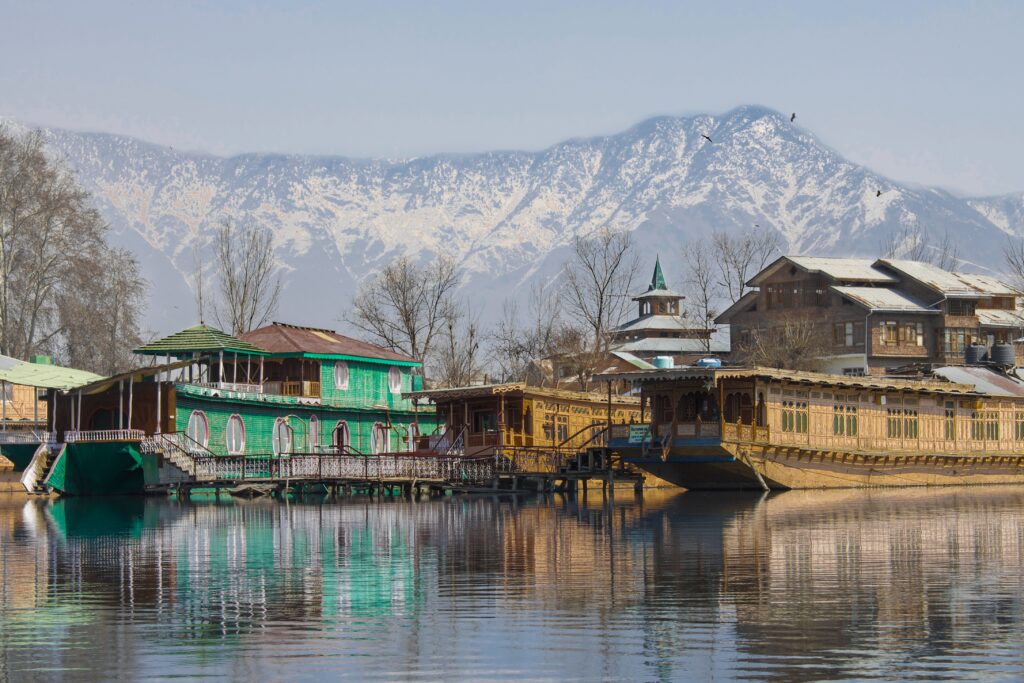
Needless to say, you would need a home. Dal Lake is a perfect place to submerge in the peacefulness of water, enjoy shikara rides, and experience a houseboat stay without burning a hole in your pocket. There are plenty of options available. The Kashmir houseboats are pretty cheap and impressively royal. An average room in a houseboat with all amenities, including breakfast, will cost around INR 900.
Where to Stay in Srinagar:
- Houseboat Stays (Most Recommended for 2-3 Days)
- Location: Dal Lake, Nigeen Lake
- Cost: ₹800-3,000 per night
- Includes: Breakfast, wifi, room service
- Experience: Authentic Kashmiri hospitality, waterfront views, traditional interiors
- Best For: First-time visitors, couples, families
- Booking: Can be booked directly or through local tour operators
- Budget Hotels & Guesthouses
- Location: Near Lal Chowk, Boulevard Road
- Cost: ₹600-1,500 per night
- Facilities: Basic amenities, some with wifi
- Best For: Solo travelers, backpackers
- Examples: Areas near Dal Gate, Residency Road
Mid-Range Hotels
- Location: Boulevard Road, Dalgate area
- Cost: ₹2,000-5,000 per night
- Facilities: Modern amenities, restaurants, travel desk
- Best For: Comfortable stay seekers, small families
- Advantage: Easy access to major attractions
- Luxury Hotels & Resorts
- Location: Overlooking Dal Lake, Zabarwan Range
- Cost: ₹6,000-20,000+ per night
- Facilities: Spa, fine dining, concierge, premium views
- Best For: Honeymoon couples, luxury travelers
- Experience: World-class hospitality with Kashmiri touch
Booking Tips:
- Book 2-3 weeks in advance during peak season (April-June, December-January)
- Off-season (July-September) offers 30-40% discounts
- Verify houseboat registration with J&K Tourism
- Check if meals are included (most houseboats include breakfast)
- Request lake-facing rooms for best views
- Negotiate for stays longer than 2 nights
Delicacies of Srinagar
A Food Lover’s Guide to Kashmir
I cannot even describe the delicious food of Srinagar. Many indigenous spices are grown here, and so the flavors of Kashmir would fill your mouth with water every time you see it. You will also get all kinds of North and South Indian cuisine, but eat traditional Kashmiri dishes in Kashmir. There are so many food options in Srinagar. In 2 Nights 3 Days in Srinagar, you will indeed have four full-course meals – 2 lunches and two dinners.
Must-Try Kashmiri Dishes:
- Non-vegetarian Wazwan
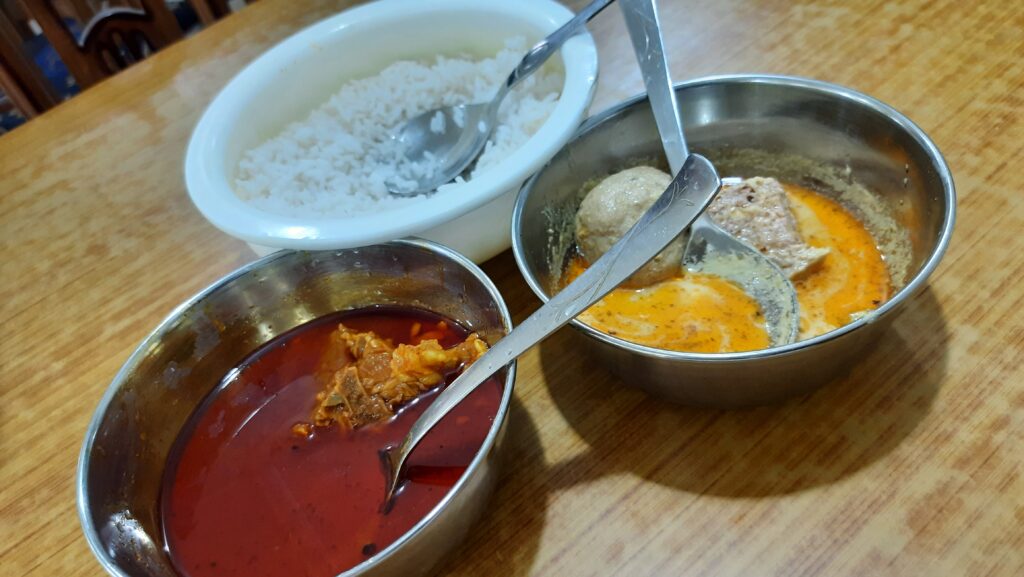
Wazwan in itself is a multi-course meal. Almost all dishes are meat-based. It is a combination of 36 dishes that includes meat dishes, rice, and others.
Must Try in Wazwan: Gushtaba, Rogan Josh, Riste, Doudha Ras, Waza Kokur, Tabakh Maaz, Dhaniwal Korma, Aab Gosh, Koshur Kabab, Naate Yakhin.
Cost: ₹800-1,500 per person for full Wazwan
Where to Try: Ahdoos, Mughal Darbar, Shamyana Restaurant
- Vegetarian and Non-Vegetarian Kashmiri Pulao
Fragrant rice cooked with dry fruits, saffron, and aromatic spices.
Cost: ₹150-300 per plate - Vegetarian Options
Ladyar Chaman (Indian Cheese in Turmeric), Veth Chaman (Indian Cheese, cooked in oil and Kashmiri spices), Dama Olav (Potato), Nadru Yakhni (Lotus Stem), Hak (with Nadru/Vangan), Nadru Palak.
Cost: ₹80-200 per dish
Best For: Pure vegetarian travelers
Beverages & Snacks:
Fill your mornings and evenings with Kahwah tea and noon-chai with some bakery biscuits and Kabab on the side.
- Kahwah (Green Tea with saffron, almonds, cardamom): ₹30-80 per cup
- Noon Chai (Pink Salt Tea): ₹20-50 per cup
- Bakery Items: Sheermal, Baqerkhani, Kashmiri breads (₹10-40 each)
- Street Snacks: Nadru Monji (lotus stem fritters), Kashmiri Kebabs (₹50-150)
Famous Restaurants in Srinagar:
Traditional Kashmiri Cuisine:
- Ahdoos Restaurant (Residency Road) – Since 1918
- Mughal Darbar (Residency Road) – Famous for Wazwan
- Shamyana Restaurant (Boulevard Road) – Lake views with food
Multi-Cuisine:
- Stream Restaurant (Near Dal Lake) – Continental and Kashmiri
- Khyber Restaurant (Near Boulevard) – North Indian and Kashmiri
- Chinar Restaurant (Various locations) – Family dining
Quick Bites & Cafes:
- Chai Jaai – Modern cafe with Kashmiri touch
- Café Arabica – Coffee and snacks near Dal Lake
- Local Dhabas near Lal Chowk – Budget-friendly authentic food
Food Budget Guide:
- Budget: ₹500-800 per day per person
- Mid-range: ₹1,000-1,500 per day per person
- Luxury: ₹2,000+ per day per person
Shopping in Srinagar
Shopping in Srinagar is a must. I would advise you to come almost empty-handed and go back stuffed. Warm clothes, ponchu, and pashmina shawls come in a wide range. Coming to the markets where you will get good Kashmiri handicrafts at affordable prices, here is the list:
Best Shopping Places in Srinagar:
Dal Lake Street Market: Every day from 07:00 pm to 10:00 pm, a street market is set up on Ghat 15.
What to Buy: Evening wear, handicrafts, souvenirs, snacks
Bargaining: Expected and encouraged
Sunday Market: This market is a flea market that runs in Lal Chowk and opens after 10:00 am every Sunday.
What to Buy: Antiques, vintage items, local products, household items
Experience: Authentic local shopping atmosphere
Budshah Chowk & Residency Road
Specialty: Permanent shops for authentic Kashmiri products
Best For: Quality assured shopping
What to Buy in Srinagar:
- Pashmina Shawls & Woolen Products
- Authentic Pashmina: ₹5,000-50,000+ (depending on quality)
- Kashmiri Shawls: ₹1,500-10,000
- Ponchos: ₹800-2,500
- Socks & Gloves: ₹100-500
- Tip: Check for pure pashmina test (burn test, feel test)
- Handicrafts & Carpets
- Paper Mâché Items: ₹200-5,000 (boxes, vases, decorative items)
- Walnut Wood Carvings: ₹500-15,000 (furniture, decorative pieces)
- Kashmiri Carpets: ₹10,000-5,00,000+ (hand-knotted silk/wool)
- Crewel Embroidery: ₹500-5,000 (cushion covers, wall hangings)
- Food Items
- Kashmiri Saffron (Kesar): ₹800-2,000 per gram
- Walnuts (Akhrot): ₹600-1,200 per kg
- Kashmiri Apples: ₹80-150 per kg (seasonal)
- Kashmiri Honey: ₹400-800 per kg
- Dried Fruits: ₹400-1,500 per kg
- Traditional Jewelry
- Silver Jewelry: ₹500-5,000
- Kundan Work: ₹800-8,000
- Traditional Kashmiri Ornaments: Varies widely
Buying Saffron: Expert Tips
Srinagar is famous for its indigenous spices. Saffron is probably one of the priciest spices in the world. But it comes with many medicinal benefits, and its aroma and color fill up one’s senses. Apart from Iran, Spain and Greece, it is best grown in Kashmir. But buying it without knowing how to judge its quality is not advised because you might end up paying money on a fake one that might impact your health negatively. Here is an article on how to buy the best saffron.
How to Identify Authentic Saffron:
- Color Test: Deep red threads with slight orange tips
- Aroma Test: Strong, distinct fragrance (not hay-like smell)
- Water Test: Slowly releases color in water (15-20 minutes), water turns golden yellow
- Price Check: Authentic Mogra saffron costs ₹350-450 per gram
- Touch Test: Threads should not break easily when rubbed
- Avoid: Powder form (easily adulterated), unusually cheap saffron
Where to Buy Authentic Saffron:
- Government Emporium near Lal Chowk (guaranteed authentic)
- Licensed dealers on Residency Road
- Kashmir Government Arts Emporium
- Directly from Pampore (saffron town, 15 km from Srinagar)
Shopping Tips for Srinagar:
- Always bargain (30-50% reduction is common)
- Compare prices at 3-4 shops before buying
- Buy from government-certified shops for high-value items
- Keep cash handy (many shops don’t accept cards)
- Get proper bills and certificates for expensive purchases
- Avoid buying from aggressive street vendors
- Best shopping time: Late afternoon or evening
- Check customs limits for saffron if traveling internationally (usually 100g allowed)
Places to Visit in Srinagar
Day 1: Dal Lake, Heritage Sites & Evening Magic
Morning (6:00 AM – 12:00 PM)
Dal Lake and Shikara Ride
Everything in Srinagar goes in and around Dal Lake. It is believed to be the flood-lung of the Jhelum river. Dal Lake in itself is divided into two parts: Small Dal and Big Dal, both separated by swamp and slush. Contributed by Santhosh.
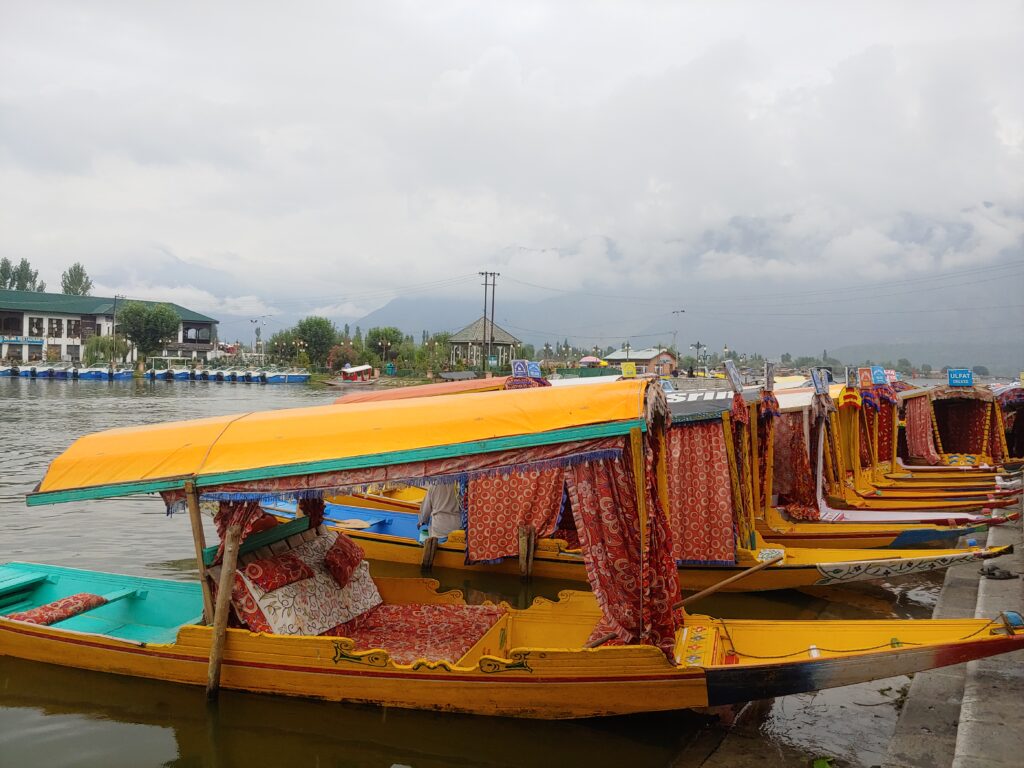
Dal Lake is marked and dotted by many marvelous wonders. A calming Shikara ride will take you to the intricate waterways of Dal Lake and will transport you to a peaceful world surrounded by the bubbling sound of water and birds.
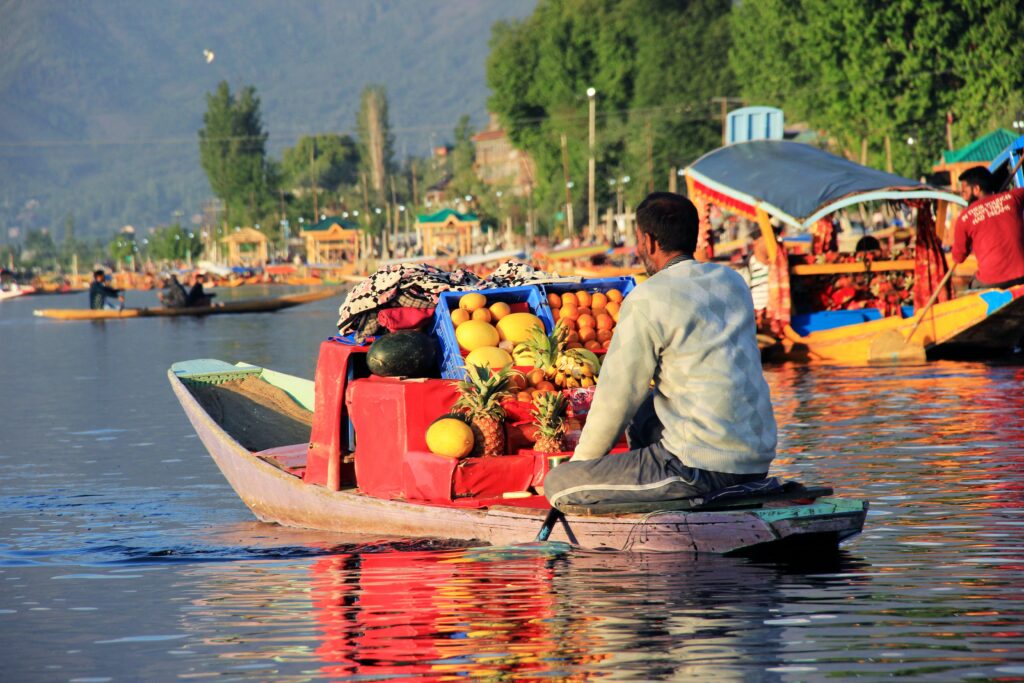
To observe the melting sun and let the mirages dissolve in the placid water, take a Shikara ride in the evening. Apart from being the gondolas of the water, they also serve as mini-shops for food, flowers, and artefacts sellers.
Timing: Start at 6:00 AM for sunrise (magical experience!)
Duration: 1-2 hours
Cost: ₹500-1,000 per hour (negotiate beforehand)
What to See: Floating vegetable market (early morning only), houseboats, Nehru Park, lotus gardens
Photography: Golden hour shots are spectacular
Shikara Ride Tips:
- Book through your hotel for better rates
- Wear warm clothes in morning/evening
- Carry water and snacks
- Keep valuables safe
- Don’t buy expensive items from floating vendors (overpriced)
Char Chinar (Rupa Lank)
Char Chinar/Rupa Lank is one of the two artificial islands constructed by Mughal Emperors. Another artificial island is Sone Lank that overlooks the holy shrine of Hazratbal.
Timing: 8:00 AM – 10:00 AM
Access: Via Shikara (₹50-100 extra from regular ride)
Duration: 30 minutes
Highlight: Four majestic Chinar trees at island corners
Pride of Kashmir – Chinar Trees:
Chinar trees amplify the grandeur and pride of Kashmir. Brought and planted in India by Akbar, its values and beauty outweigh anything else.
It switches colors: blood red, amber, yellow; the vast canopy provides shade on hot days; it is used for medicinal purposes; its wood is used to make decorative items; lastly, its fallen leaves are still valuable for making Kangri, which is a fire pot used to keep the place warm in the cold.
Chinar is not just a tree; it has an enigma attached to it. No one who sits under it leaves without feeling the magic and touch of the Chinar.
Contributed by Santhosh
Late Morning (10:00 AM – 1:00 PM)
Hazratbal Shrine
Situated on the left bank of Dal Lake, the Hazratbal shrine is a majestic and architecturally unique example of Indo-Islamic architecture. It contains a relic, the Moi-e-Muqaddas, which is believed to be the hair of Prophet Muhammad’s beard.
The shrine sees an influx of locals for mass prayers on Fridays. Tourists flock to Hazratbal to seek blessings and get a glimpse of relics that are displayed on special occasions.
It is important to note that men can go to the inner hall, while women are allowed only till the outer hall.
Timing: 10:30 AM – 12:00 PM
Entry: Free
Dress Code: Modest clothing, head covering required for women
Duration: 45 minutes to 1 hour
Photography: Allowed outside, restricted inside
Special Days: Relics displayed on special religious occasions
Important Rules:
- Remove shoes before entering
- Maintain silence inside premises
- No photography of relics
- Respect religious sentiments
- Separate entry lines for men and women
Nigeen Lake
Nigeen Lake is a mildly eutrophic lake, sometimes considered a part of Dal Lake—a narrow strait connects them. The lake is significant because it is primarily surrounded by a large number of Willow and Poplar trees.
Timing: 12:00 PM – 1:00 PM
Best For: Peaceful retreat, less crowded than Dal Lake
Activities: Shikara rides, photography, bird watching
Unique Feature: Quieter atmosphere, preferred by those seeking solitude
Afternoon (1:00 PM – 4:00 PM)
Lunch Break: Try local cuisine at restaurants near Boulevard Road (1:00 PM – 2:30 PM)
Rest: Return to hotel/houseboat for afternoon rest (2:30 PM – 4:00 PM)
Evening (4:00 PM onwards)
Floating Market Experience
Just as the dawn cracks, you will start hearing sounds of local vegetable vendors dressed up in traditional pheran, coming out on their boats to sell their produce. More than 6000 local families depend on this floating market. In the morning, so much goes on in Dal Lake that you cannot even imagine it without witnessing it. With the sun still sleeping, as the mountains cover beautiful Srinagar, and voices of sellers occupy the whole valley, you can be a silent spectator or indulge in the epiphany if you want to. And just like that, in a snap, in less than an hour, before the dawn breaks, everything disappears as if nothing ever existed.
Note: If you missed the morning floating market (5:00 AM – 7:00 AM), plan to wake up early on Day 2 for this unique experience.
Evening Shikara Ride & Sunset
Timing: 5:00 PM – 7:00 PM
Duration: 1.5-2 hours
Cost: ₹600-1,000
Experience: Watch sunset over Dal Lake, see houseboats lit up, enjoy tranquil evening atmosphere
Musical Fountain and Laser Show
Another attraction on Srinagar’s plate is the Musical Fountain and Laser Show. The show runs adjacent to SKICC Boulevard every day, and tickets are available at the site. With mouth-watering delicacies served in open restaurants on the side, you can relish the sights and story of Srinagar and spend a beautiful evening here. Note, the show timings are 08:00 to 08:30 pm.
Timing: 8:00 PM – 8:30 PM
Location: SKICC (Sher-i-Kashmir International Convention Centre) Boulevard
Entry Fee: ₹50-100 per person
Duration: 30 minutes
Content: Kashmir’s history and culture through light and music
Tip: Reach 15 minutes early for good seats
Evening Activities: Dinner at a traditional restaurant, shopping at Dal Lake Street Market (7:00 PM – 10:00 PM)
Day 2: Mughal Gardens, Temples & Mountain Views
Morning (7:00 AM – 12:00 PM)
Pari Mahal (The Palace of Fairies)
Pari/Peer Mahal is a seven-terraced garden located at the top of the Zabarwan Mountain range, which was made as patronage in the reign of Mughal emperor Shah Jahan. It is an example of Mughal architecture and is known for its breathtaking views of Dal Lake and the Kashmir Valley.
Timing: 7:30 AM – 9:00 AM (for best light and fewer crowds)
Entry Fee: ₹20 per person
Duration: 1 hour
Height: Located at 2,130 meters
View: Panoramic vistas of Dal Lake and Srinagar city
History: Built in mid-1600s as Buddhist monastery, later used as observatory
What to See:
- Seven terraced gardens ascending the mountain
- Mughal architectural ruins
- Sunrise view over Dal Lake
- Photo opportunities at every terrace
- Ancient water channels and fountains (partially restored)
Tips:
- Wear comfortable shoes (steep climb)
- Carry water
- Best visited in clear weather
- Morning light is perfect for photography
Mughal Gardens Tour (9:00 AM – 1:00 PM)
Srinagar is home to several beautiful Mughal gardens, including:
Shalimar Bagh (Garden of Love)
One of the best Mughal monuments is the Shalimar Bagh in Srinagar. Emperor Jahangir built it in 1619. Through a channel, the garden is linked to the northeast of Dal Lake.
Timing: 9:00 AM – 10:30 AM
Entry Fee: ₹25 per person
Duration: 1-1.5 hours
Layout: Three terraces – Diwan-e-Aam, Diwan-e-Khas, Zenana Garden
Highlight: 410 fountains, ancient Chinar trees, royal pavilion
Historical Significance: Built by Emperor Jahangir for his wife Nur Jahan. The topmost terrace was reserved for royal ladies, middle for nobles, and lower for public.
Best Time: Spring (April-May) when flowers bloom, Autumn (September-October) for Chinar colors
Nishat Bagh (Garden of Joy)
Known as the “Garden of Joy,” Nishat Bagh is the second largest Mughal garden in the Kashmir Valley.
Timing: 10:45 AM – 12:00 PM
Entry Fee: ₹25 per person
Duration: 1 hour
Layout: 12 terraces representing 12 zodiac signs
Location: Right on Dal Lake shore
Built By: Asif Khan (brother of Nur Jahan) in 1633
Unique Features:
- Best maintained Mughal garden
- Stunning backdrop of Zabarwan mountains
- Direct Dal Lake access
- Colorful flower beds in season
- Ancient Chinar trees over 400 years old
Photography: Best garden for professional photoshoots and pre-wedding shoots
Chashma Shahi (The Royal Spring)
Also known as the Royal Spring, this terraced garden is famous for its natural spring water.
Timing: 12:15 PM – 1:00 PM
Entry Fee: ₹20 per person
Duration: 30-45 minutes
Specialty: Natural spring water believed to have medicinal properties
Size: Smallest of the three main Mughal gardens
Built By: Ali Mardan Khan in 1632 for Emperor Shah Jahan
Highlights:
- Three terraces with fountains
- Natural spring (Chashma Shahi) with pure mountain water
- Pavilion at the top terrace
- Smallest but most intimate garden
- Less crowded than Shalimar and Nishat
Mughal Gardens Tour Tips:
- Hire a taxi for all three gardens: ₹800-1,200
- Visit in sequence: Pari Mahal → Shalimar → Nishat → Chashma Shahi
- Total distance covered: About 15 km
- Carry sunscreen, hat, and water
- Pack light snacks or breakfast
- Best season: April-May (tulips, flowers) or September-October (Chinar colors)
- Combined tour duration: 4-5 hours
Afternoon (1:00 PM – 4:00 PM)
Lunch: Traditional Kashmiri Wazwan at Ahdoos or Mughal Darbar (1:00 PM – 2:30 PM)
Rest/Shopping: Browse shops on Residency Road or return to hotel (2:30 PM – 4:00 PM)
Late Afternoon & Evening (4:00 PM onwards)
Shankaracharya Temple (Takht-e-Suleiman)
Dedicated to Lord Shiva, its origin goes back to 200 BC. The temple opens doors to history buffs, nature lovers, spiritual seekers and believers. It is a Hindu temple and is also considered sacred by Buddhists. Reachable just by climbing 243 stairs, this temple is mainly frequented by devotees during Amarnath Yatra. People also celebrate Mahashivratri here with great pomp and show.
Timing: 4:00 PM – 6:00 PM
Entry: Free (ID proof required at security check)
Elevation: 1,000 feet above Srinagar
Duration: 1.5-2 hours (including climb and darshan)
Historical Significance: Temple dates back to 200 BC, renovated by Adi Shankaracharya in 8th century
What to Expect:
- Security check at base (mandatory)
- 243 stone steps to temple top
- Octagonal base with circular top architecture
- 360-degree panoramic view of Srinagar and Dal Lake
- Ancient Shiva Lingam inside sanctum
- Persian inscription from 1659 on the stairs
Best Time: Late afternoon for sunset views
Photography: Allowed outside, restricted inside temple
Dress Code: Modest clothing, remove shoes before entering
Tips:
- Carry valid ID proof (Aadhar, Passport, Driving License)
- Start climb at least 1.5 hours before sunset
- Wear comfortable shoes for climbing
- Carry water bottle
- Not recommended for people with knee/heart problems
- Breathtaking views make the climb worthwhile
Security Note: Due to security reasons, phones and cameras may need to be deposited at checkpoint (policies vary)
Final Evening (6:30 PM – 10:00 PM)
Sunset View: Watch sunset from Shankaracharya or return to Dal Lake
Dinner: Farewell dinner at hotel or local restaurant
Last Shopping: Final
Best Time to Travel to Srinagar
Srinagar is blessed with 4 distinct seasons: Spring, Summer, Autumn, and Winter. Each season offers a unique charm and experience, making it a year-round destination depending on what you’re looking for.
Spring (March to May)
Spring is when Srinagar comes alive with vibrant colors. The famous tulip gardens bloom during this time, especially in April, making it one of the most picturesque periods to visit.
The temperature ranges from 10°C to 25°C, making it pleasant for sightseeing and outdoor activities. This is the perfect time to witness the Tulip Festival at Indira Gandhi Memorial Tulip Garden, Asia’s largest tulip garden.
The gardens, lakes, and mountains are adorned with blooming flowers, and the weather is ideal for shikara rides and exploring Mughal gardens.
Summer (June to August)
Summer is the peak tourist season in Srinagar, with temperatures ranging from 15°C to 30°C.
This is when the rest of India experiences scorching heat, making Srinagar a perfect escape. The Dal Lake is bustling with activity, houseboats are fully operational, and all tourist attractions are accessible.
If you’re planning to combine your Srinagar visit with treks like Tarsar Marsar, Kashmir Great Lakes, or Gangabal Lake Trek, summer is the ideal time. However, expect higher prices and crowded attractions during this season.
Autumn (September to November)
Autumn transforms Srinagar into a canvas of red, orange, and golden hues. The famous Chinar trees change colors, creating a mesmerizing landscape. The temperature ranges from 8°C to 23°C in early autumn, gradually dropping as winter approaches.
This season offers clear skies, beautiful photography opportunities, and fewer crowds compared to summer. The weather is pleasant for sightseeing, and you can enjoy the harvest season with fresh apples, walnuts, and saffron available in local markets.
Winter (December to February)
Winters start in October and end in March. It is when Srinagar wraps itself in the veil of snow and rests for a while. The temperature can drop below freezing, ranging from -2°C to 12°C.
While many houseboats and some tourist facilities close during harsh winter months, visiting Srinagar in winter is a different experience altogether. You’ll witness snow-covered landscapes, frozen Dal Lake (in extreme cold), and experience the traditional Kashmiri winter lifestyle. This is also the best time to visit nearby Gulmarg for skiing and snow activities. However, carry heavy woolens and be prepared for occasional road closures due to heavy snowfall.
Our Recommendation: If you want to see colors, experience happiness, witness the lifeline flowing on the Dal Lake, you must come between April to October. You will come bewildered and leave speechless. For adventure enthusiasts and snow lovers, December to February offers a magical winter wonderland experience.
Other Places to Visit near Srinagar
You don’t go to Srinagar every day. If you have more time to spare, cover these places as well and tick some checkboxes from your bucket list:
Gulmarg (47 km from Srinagar, 1.5-2 hours drive)
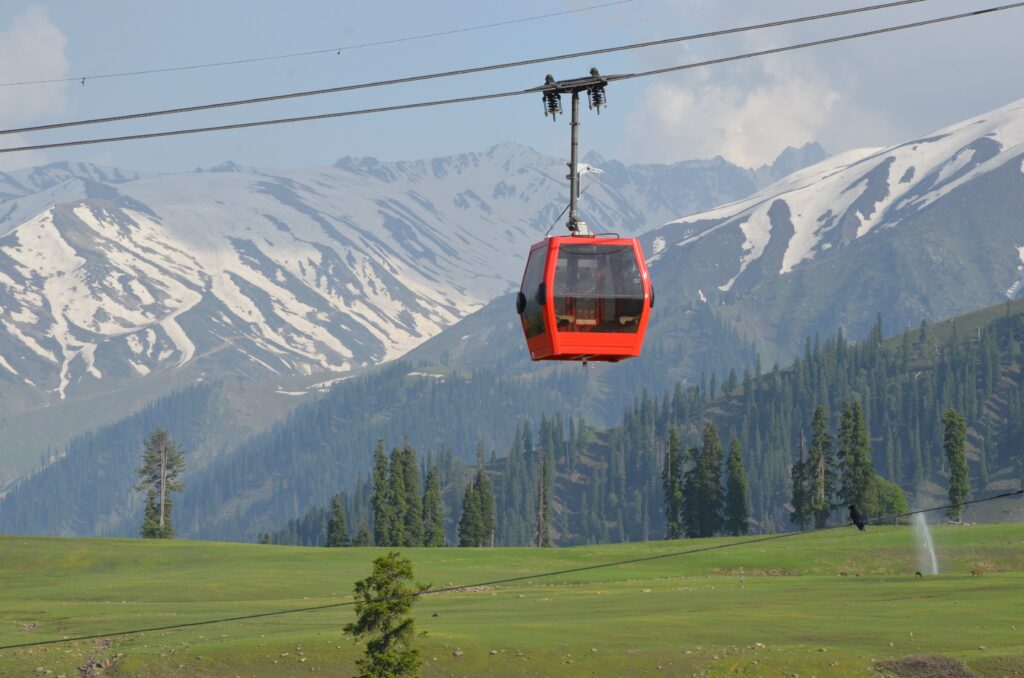
Gulmarg, meaning “Meadow of Flowers,” is a popular hill station famous for skiing, snowboarding, and the highest cable car ride in the world – the Gulmarg Gondola. Located at an altitude of 2,650 meters, it transforms into a winter sports paradise from December to March.
Things to do in Gulmarg:
- Gulmarg Gondola: Take Asia’s highest and longest cable car ride to Apharwat Peak (3,979 meters). The two-phase gondola offers breathtaking views of snow-capped peaks and valleys.
- Skiing and Snowboarding: Professional instructors and equipment rentals are available for beginners and advanced skiers.
- Alpather Lake: A beautiful alpine lake located at the foot of twin Apharwat Peaks, accessible through a trek (best visited in summer).
- Maharani Temple: A small stone temple dedicated to Lord Shiva, offering panoramic views of Gulmarg.
- Gulmarg Golf Course: One of the highest golf courses in the world, maintained by the Indian Army.
- St. Mary’s Church: A historic church built in 1902, showcasing beautiful architecture.
- Strawberry Valley and Baisaran Valley: Lush green meadows perfect for picnics and pony rides.
Best Time: December to March for snow activities, May to September for meadows and trekking.
Pahalgam (88 km from Srinagar, 2.5-3 hours drive)
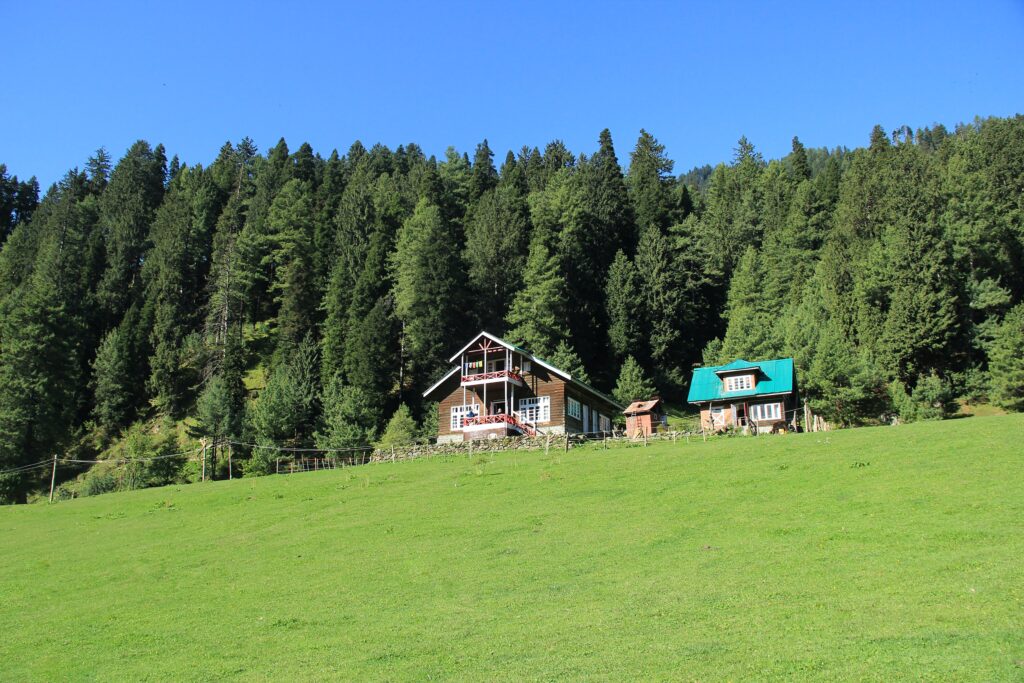
Pahalgam, the “Valley of Shepherds,” sits at an altitude of 2,740 meters on the banks of the Lidder River. It serves as the base camp for the annual Amarnath Yatra and is known for its pristine natural beauty.
Things to do in Pahalgam:
- Betaab Valley: Named after the Bollywood movie “Betaab,” this valley offers stunning views with snow-capped mountains, lush meadows, and crystal-clear streams. It’s 15 km from main Pahalgam.
- Aru Valley: A picturesque village and meadow located 12 km from Pahalgam, serving as a base for trekking to Kolahoi Glacier and Tarsar Marsar Lake.
- Chandanwari: Located 16 km from Pahalgam, it’s the starting point of the Amarnath Yatra and offers beautiful views with snow bridges even in summer.
- Baisaran: Often called “Mini Switzerland,” this meadow is accessible via a pony ride or short trek and offers 360-degree views of snow-capped mountains.
- Lidder River: Perfect for trout fishing (with permits) and riverside walks. You can also enjoy river rafting during summer months.
- Mamaleshwar Temple: An ancient Shiva temple on the banks of Lidder River, dating back to the 12th century.
- Pony Rides: Explore the valleys on horseback, a popular activity among tourists.
Best Time: April to October for pleasant weather; December to February for snow enthusiasts.
Dachigam National Park (22 km from Srinagar, 45 minutes drive)
It was home to 10 villages which were then relocated to make this national park. Spread over 141 square kilometers, Dachigam is divided into Lower Dachigam and Upper Dachigam regions.
Wildlife and Flora:
- Home to the critically endangered Hangul (Kashmir Stag) – approximately 200 remain in the wild
- Himalayan brown bears and black bears
- Leopards, musk deer, and jackals
- Over 150 species of birds including Himalayan Monal and Golden Oriole
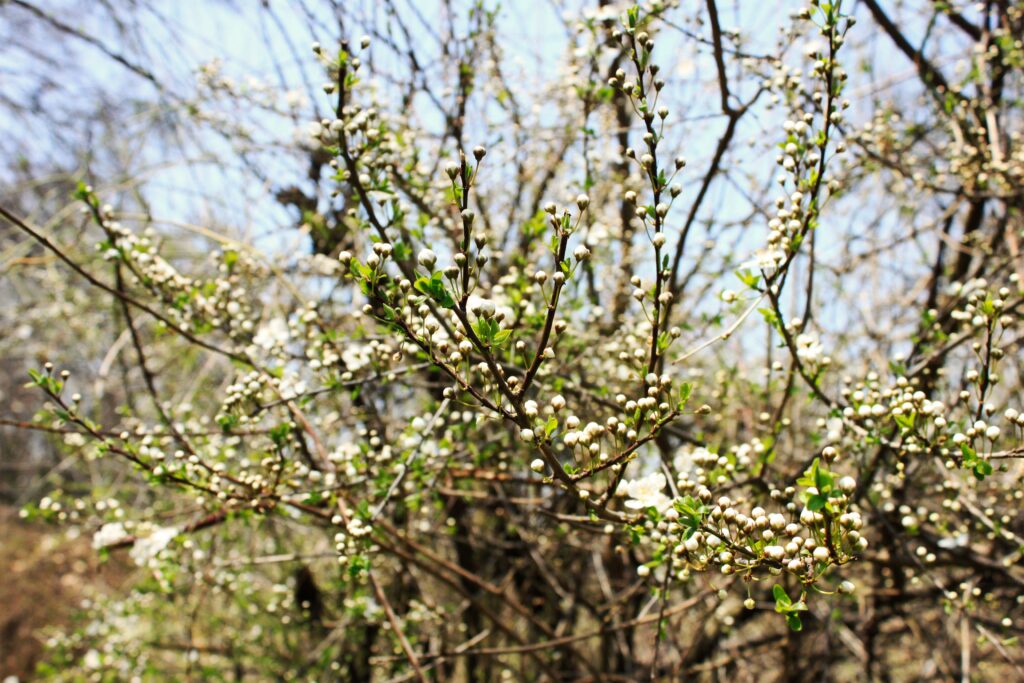
- Alpine pastures, meadows, waterfalls, and diverse flora
Visiting Information:
- Entry requires permits from the Wildlife Department
- Best Time: April to October for Upper Dachigam; Lower Dachigam is accessible year-round
- Early morning safaris offer the best wildlife spotting opportunities
- Guided tours are mandatory for safety
Manasbal Lake (30 km from Srinagar, 1 hour drive)
Often called the “Supreme Gem of all Kashmir Lakes,” Manasbal is the deepest lake in Kashmir. It’s less commercialized than Dal Lake, offering a peaceful retreat.
Things to do:
- Bird watching (winter migratory birds)
- Shikara rides in serene waters
- Visit the nearby Mughal Garden ruins
Best Time: March to November.
Tips for Day Trips from Srinagar:
- Start early morning to avoid traffic and make the most of daylight
- Hire a reliable taxi or book through your hotel for safety
- Carry warm clothes as temperatures can drop significantly at higher altitudes
- Keep permits and ID proofs handy for checkpoints
- Pack lunch or snacks as food options may be limited in remote areas
- Respect local customs and the environment – carry back all trash
Yusmarg (47 km from Srinagar, 1.5 hours drive)
A lesser-known gem, Yusmarg is a hidden meadow surrounded by dense forests and mountains. It’s perfect for those seeking tranquility away from tourist crowds.
Things to do:
- Meadow walks and picnics
- Pony rides to Doodh Ganga River
- Trekking to nearby peaks
- Bird watching and nature photography
Best Time: May to September.
Frequently Asked Questions (FAQ) – Dudhsagar Falls
How to visit Dudhsagar Falls?
There are three main ways to visit Dudhsagar Falls:
By Jeep Safari: From Colem village, take a shared jeep (INR 500 per person) for a 45-minute jungle ride, followed by a 10-minute trek to the falls. Available from October onwards. Only 300 jeeps allowed daily.
By Trekking: Trek approximately 14 km from Kulem village through forests and streams. Takes about 4-5 hours. Start early morning around 9 am.
By Train: Take trains on the Vasco-Londa route that pass by the falls for a quick view from the window.
Entry Fee: Rs. 400 per person, camera Rs. 300.
Can we see Dudhsagar Falls from train?
Yes! Trains on the Vasco Da Gama to Madgaon route pass by Dudhsagar Falls. The nearest station is Kulem, and trains slow down to let passengers enjoy the view. However, the view lasts only a few seconds, so keep your camera ready. Indian Railways has banned boarding or de-boarding at the Dudhsagar railway stop. Trains between Margao/Madgaon and Castle Rock or Londa Junction offer the best views.
Can we go to Dudhsagar Falls by car?
No, personal cars are not allowed to go directly to the falls. You can drive to Colem (Kulem) village, park your car there, and then take an authorized jeep for the final journey. The route passes through Bhagwan Mahavir Wildlife Sanctuary with rugged terrain and river crossings that require 4×4 vehicles. Only 300 jeeps are permitted daily for environmental conservation.
Distances by road:
- From Goa Airport: 60 km
- From Panaji: 60 km
- From Margao: 46 km
When to visit Dudhsagar Falls?
Best Time: October to May (Post-Monsoon to Summer) This is ideal for visiting with full flowing water, pleasant weather, and operational jeep safaris. October-November offers lush green surroundings, while December-February provides the best weather.
Avoid: June to September (Monsoon) While the waterfall is most powerful during monsoon, visiting is dangerous due to heavy rainfall, slippery paths, strong currents, and closed routes. Jeep safaris are not operational during this period.
Start your trip early morning to have a full day at the falls.
How to reach Dudhsagar Waterfalls?
Dudhsagar Falls is located on the Goa-Karnataka border, 310 meters high. Here’s how to reach:
By Air: Fly to Goa International Airport (60 km away), then hire a cab to Colem village.
By Train: Take a train to Kulem station from Vasco Da Gama or Madgaon. From Kulem, it’s 9.8 km to the falls.
By Road: Drive to Colem village from Panaji (60 km) or Margao (46 km).
From Colem village: Take a jeep safari (INR 500 per person) or trek 14 km to reach the falls.
Important: No drinking water, restrooms, or cellular network near the falls. It’s a plastic-free zone.
Route: How to reach Dudhsagar Waterfalls?
From Bangalore: Drive via NH 75 → Hubli → Londa → Colem (500 km, 10-11 hours) OR take train to Londa Junction, then to Kulem.
From Mumbai: Drive via NH 66 → Panaji → Molem → Colem (580 km, 11-12 hours) OR take train to Madgaon, then local train to Kulem.
From Panaji: Drive NH 4A → Ponda → Molem → Colem (60 km, 1.5-2 hours).
From Margao: Drive NH 4A → Molem → Colem (46 km, 1.5 hours) OR take local train to Kulem (50 rupees).
Final leg from Colem: Take jeep safari (45 mins + 10 min trek) OR trek 14 km through jungle (4-5 hours).


Hello Supriya. U have an esthetic touch in ur writing. U have provided many details. Thanks for an informative article. Much love ❤️
Glad to know this Kamaljeet. Come back and let us know about your experience.
Thanks for the in-depth wonderful article you turned out here Very Informative Loved It Thankyou Soo Much For Sharing It.