Trek Difficulty Level| The Complete Guide to Choosing the Right Trek for You
Choosing the wrong trek can turn your dream adventure into a nightmare.
I’ve seen too many enthusiastic trekkers struggling on trails that were way beyond their fitness level. Some had to turn back midway. Others pushed through but ended up with altitude sickness or injuries that could have been avoided.
The problem? They didn’t understand trek difficulty levels before signing up.
At Plan the Unplanned, we’ve helped thousands of trekkers find their perfect adventure. And here’s what we’ve learned: the right trek isn’t about choosing the most Instagram-worthy destination. It’s about matching your fitness, experience, and preparation to the trail’s demands.
In this guide, I’ll break down everything you need to know about trek difficulty levels in India. You’ll learn exactly which treks suit your current fitness level and how to prepare for harder adventures in the future.
Let’s dive in.
What Makes a Trek Difficult? The 6 Key Parameters
Before we categorize treks, you need to understand how difficulty is measured.
Trek difficulty isn’t just about altitude or distance. It’s a combination of multiple factors that work together to challenge your body and mind.
Here are the six parameters we use to grade every trek:
1. Trekking Duration
How many days will you spend on the trail? A 3-day trek Like this is obviously easier than a 12-day expedition. Longer treks test your endurance and mental stamina.
2. Trail Length
The total distance you’ll cover matters. A 40 km trek spread over 4 days is manageable. But 80 km in the same timeframe? That’s a different beast altogether.
3. Maximum Altitude
As you climb higher, oxygen levels drop. Your body needs time to acclimatize. Treks under 3,000 meters are generally safe for beginners. Above 4,000 meters, altitude sickness becomes a real concern.
4. Trail Type
Is the path well-marked or do you need to navigate through unmarked terrain? Well-maintained trails with clear markers are beginner-friendly. Scree slopes, boulder fields, and glacier crossings demand experience.
5. Daily Trekking Time
Walking 3-4 hours a day with breaks is comfortable for most people. But 8-10 hours of continuous trekking? That requires serious preparation.
6. Steepness of Trail
Gentle inclines are easy on your knees and lungs. Steep ascents and descents test your leg strength, balance, and cardiovascular fitness.
Now that you understand these parameters, let’s look at the three main difficulty levels.
Easy Treks: Perfect for First-Timers and Families
Easy treks are your gateway to the mountains.
These trails are designed for people who want to experience trekking without pushing their limits too hard.
You’ll get beautiful views, fresh mountain air, and the satisfaction of completing a trek all without requiring months of preparation.
What Defines an Easy Trek?
Here are the specific characteristics:
Trek Duration: Maximum 4 days
Daily Walking Time: 3-4 hours
Total Trail Length: Up to 50 km
Maximum Altitude: Below 3,000 meters
Trail Type: Well-marked paths with clear signage
Terrain: Mostly flat surfaces, gentle slopes, plateaus, valleys, and plains
The ascents and descents are gradual. You won’t find yourself climbing steep rock faces or crossing dangerous ridges. The trails are forgiving, and there’s usually help available if you need it.
Who Should Do Easy Treks?
Easy treks are perfect for:
- Complete beginners with zero trekking experience
- Families with children who want a nature adventure
- Older adults who want to stay active but avoid extreme challenges
- Corporate groups looking for team-building activities
- Anyone recovering from injuries or getting back into fitness
- People who want to test their interest in trekking before committing to harder trails
The best part? You don’t need any special training. Basic fitness like being able to walk for an hour without getting exhausted is enough.
6 Best Easy Treks in India
Let me walk you through some amazing easy treks that deliver incredible experiences without overwhelming you.
1. Tarsar Marsar Trek, Kashmir
This trek showcases everything beautiful about Kashmir. You’ll walk through pine forests, cross crystal-clear rivers, camp beside alpine lakes, and wake up to mountain views that look like paintings.
The trails are gentle, and the altitude gain is gradual. It’s perfect for beginners who want a taste of high-altitude trekking without the risks.
2. Agumbe Exploration, Karnataka
Known as the “Cherrapunji of South India,” Agumbe offers lush rainforests and stunning waterfalls. The Western Ghats come alive during monsoon season, making this an incredible nature walk.
The trails here are soft, and you’ll spend more time marveling at biodiversity than worrying about difficult climbs.
3. Hampta Pass Chandratal Trek, Himachal Pradesh
Despite crossing a high-altitude pass, this trek features gentle ascents that even beginners can handle. You’ll witness dramatic landscape changes—from green valleys to barren mountains—all in one trek.
The crescent-shaped Chandratal Lake at the end is worth every step.
4. Kotagiri Trek, Tamil Nadu
Tea plantation lovers, this one’s for you. Kotagiri offers easy trails through rolling hills covered in tea estates. The weather is pleasant year-round, and the views of the Nilgiri hills are spectacular.
It’s an excellent weekend trek for beginners in South India.
5. Nishani Motte Trek, Coorg
This is one of the most beginner-friendly treks in Karnataka. The trail takes you through coffee plantations and shola forests before reaching a grassy summit with 360-degree views.
The entire trek can be completed in a day, making it perfect for first-timers testing their trekking legs.
6. Kasol Kheerganga Trek, Himachal Pradesh
A favorite among backpackers, this trek combines riverside camping with natural hot springs at the summit. The trail follows the Parvati River, offering beautiful views without demanding too much effort.
The hot spring bath at Kheerganga is the perfect reward after your climb.
Moderate Treks: Step Up Your Adventure Game
You’ve done a few easy treks. The mountains are calling you back. You’re ready for something more challenging.
Moderate treks are where real adventure begins.
These treks require better fitness, more preparation, and a stronger mental game. But the rewards are proportional—you’ll access more remote locations, experience greater solitude, and earn those jaw-dropping views through genuine effort.
What Defines a Moderate Trek?
Here’s what you’re signing up for:
Trek Duration: 5-8 days
Daily Walking Time: 6-7 hours
Total Trail Length: 50-80 km
Maximum Altitude: Up to 4,000 meters
Trail Type: Steeper ascents and descents with some rough terrain
Terrain: Mix of well-marked paths and challenging sections
You’ll encounter rocky sections, stream crossings, and steeper climbs. The altitude starts affecting your breathing. Rest days become crucial for acclimatization.
Who Should Do Moderate Treks?
Moderate treks suit:
- Trekkers who’ve completed at least 2-3 easy treks
- People with reasonable fitness who can walk 10-12 km comfortably
- Adventure enthusiasts willing to train for 3-4 weeks before the trek
- Those ready to carry 8-10 kg backpacks for several hours
- Anyone looking to graduate from beginner to intermediate level
If you can climb 5-6 floors of stairs without gasping for breath, you’re probably fit enough for a moderate trek with some preparation.
How to Prepare for a Moderate Trek
Here’s a realistic 20-day preparation plan:
Week 1-2: Start with 30-minute daily walks. Increase to 45 minutes by the end of week 2. Add stair climbing—3-4 floors, multiple times a day.
Week 3: Extend walks to 60 minutes. Add a weighted backpack (5 kg) for the last 20 minutes. Introduce basic strength training—squats, lunges, and planks.
Week 4: Long weekend walks—90 minutes to 2 hours with a 7-8 kg backpack. Practice on uneven terrain if possible. Add stretching routines for flexibility.
This preparation significantly reduces your risk of injury and increases your enjoyment of the trek.
6 Best Moderate Treks in India
These moderate treks in India offer the perfect balance of challenge and beauty.
1. Brahmatal Trek, Uttarakhand
Winter trekking at its finest. The Brahmatal Trek takes you to a high-altitude lake surrounded by snow-covered peaks. You’ll see Mt. Trishul and Mt. Nanda Ghunti from the summit ridge.
The snow sections add difficulty, but the trail is manageable with proper guidance. It’s an excellent winter trek for those ready to experience snow camping.
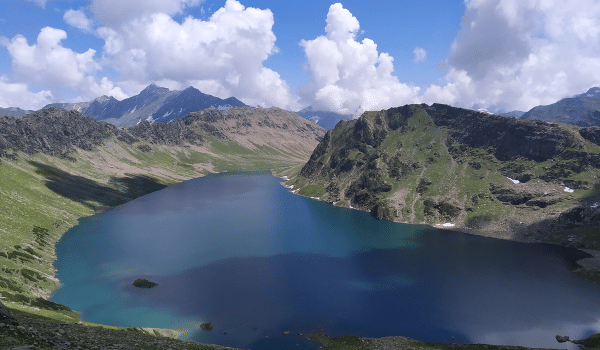
2. Kashmir Great Lakes Trek
Many trekkers call this India’s most beautiful trek, and I won’t argue. You’ll pass seven stunning alpine lakes, each with its own character and color.
The trail involves steady ascents and descents, but the scenery makes every step worthwhile. This trek offers incredible value—multiple landscapes, diverse terrain, and lake camping all in one journey.
3. Kedarkantha Trek, Uttarakhand
This is the most popular winter summit trek in India for good reason. The summit climb happens on the last day, giving you several days to acclimatize.
The panoramic view from the top covers over 20 Himalayan peaks. The campsites are stunning, especially the Juda Ka Talab clearing surrounded by pine forests.
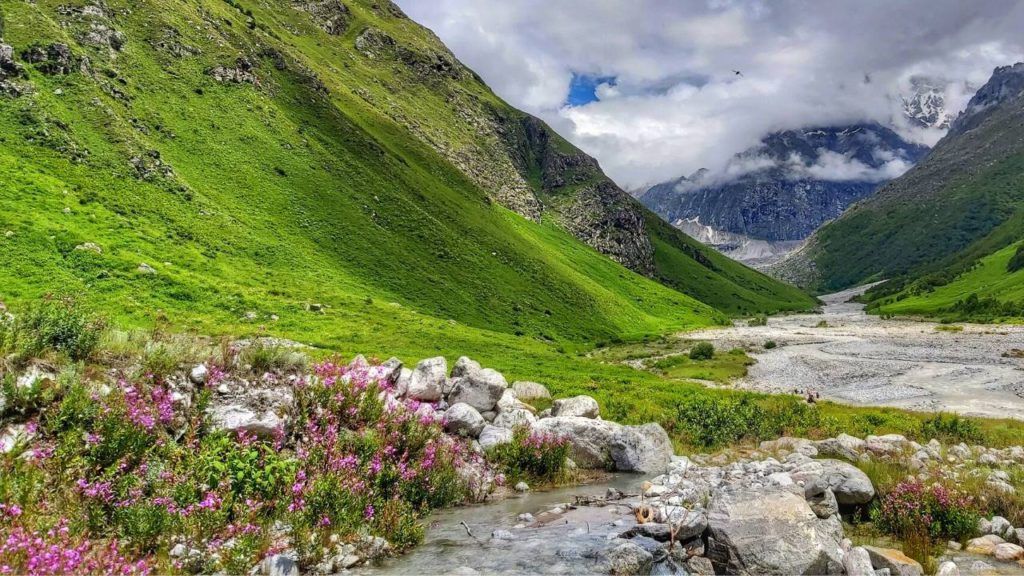
4. Valley of Flowers Trek, Uttarakhand
A UNESCO World Heritage Site, this trek is a botanist’s dream. During monsoon season (July-August), the valley explodes with over 500 species of wildflowers.
The trek combines floral meadows with the spiritual significance of Hemkund Sahib Gurudwara. The trail is moderate but becomes slippery during rains, requiring careful footing.
5. Har Ki Dun Trek, Uttarakhand
This trek takes you into a remote Himalayan valley that looks frozen in time. Ancient villages, hanging glaciers, and dense pine forests create a perfect mountain experience.
The trail is longer but the gradient is gentle. You’ll walk through Govind Wildlife Sanctuary, with chances of spotting Himalayan birds and animals.
6. Hampta Pass Trek, Himachal Pradesh
In just 5 days, you’ll cross from the green Kullu Valley to the barren Lahaul Valley. The landscape transformation is dramatic and happens within hours.
The pass crossing day is challenging but achievable for those with moderate fitness. The descent to Chatru offers thrilling views of the Chandra River valley.
Difficult Treks: For Experienced Trekkers Only
Difficult treks aren’t just harder versions of moderate ones. They’re entirely different animals.
These expeditions test everything your physical endurance, mental strength, decision-making under stress, and ability to handle discomfort for extended periods.
Only attempt difficult treks after mastering moderate ones.
What Defines a Difficult Trek?
The parameters speak for themselves:
Trek Duration: More than 10 days
Daily Walking Time: 8-10 hours (sometimes more)
Total Trail Length: Over 80 km
Maximum Altitude: 4,000 meters and above
Trail Type: Scree slopes, glacial moraines, unmarked sections, technical terrain
Terrain: Unpredictable and varied—glaciers, boulder fields, snow patches, loose rocksHere’s what makes these treks truly difficult: limited exit options. Once you commit, you often can’t turn back easily. Weather can change drastically. Rescue operations are complicated at these altitudes.
Who Should Do Difficult Treks?
Difficult treks are for:
- Experienced trekkers with multiple moderate treks completed
- People with excellent cardiovascular fitness and strong legs
- Those mentally prepared for discomfort, uncertainty, and long days
- Trekkers comfortable with high-altitude environments
- Individuals who’ve successfully handled altitude sickness prevention
- Those willing to train seriously for 2-3 months before the trek
If you’ve never been above 4,000 meters, a difficult trek isn’t your starting point.
Essential Preparation for Difficult Treks
Preparing for a difficult trek requires a structured approach:
Cardiovascular Training: Run or cycle 4-5 times weekly. Build up to 10 km runs comfortably.
Strength Training: Focus on legs, core, and back. Weighted squats, lunges, deadlifts, and planks should be regular exercises.
Altitude Preparation: If possible, do acclimatization treks at 3,000-3,500 meters before attempting higher altitudes.
Long Treks: Complete 15-20 km treks with a full backpack (12-15 kg) at least twice before your expedition.
Mental Preparation: Read accounts of the trek. Understand what you’re getting into. Practice meditation or breathing exercises for stress management.
8 Most Difficult Treks in India
These treks represent the pinnacle of Indian trekking challenges.
1. Kumara Parvatha Trek, Karnataka
Don’t let the location fool you—this is one of the most difficult treks in Karnataka and one of the toughest in India.
The trek features a brutal 3,000-foot climb through dense forests in the first few hours. The trail is steep, relentless, and slippery during monsoons. Volcanic rock formations create technical sections requiring careful navigation.
But reach the summit, and you’ll understand why trekkers keep coming back. The Western Ghats stretch endlessly in every direction, with lush green streams cutting through the valleys below.
This is Karnataka’s ultimate trekking challenge—and many underestimate it.
2. Chadar Trek, Ladakh
Walking on a frozen river. That’s exactly what you do on the Chadar Trek.
The Zanskar River freezes during winter, creating a temporary “road” of ice. You’ll camp in caves, walk on unpredictable ice that cracks and shifts, and endure temperatures dropping to -30°C.
The difficulty isn’t just physical—it’s psychological. The cold penetrates everything. Your water bottles freeze. Your hands go numb even with the best gloves.
This trek demands mental toughness above all else.
3. Roopkund Trek, Uttarakhand
Famous for the mysterious skeletal lake, Roopkund is as challenging as it is intriguing.
The trek crosses multiple altitude zones rapidly. You’ll climb through forests, meadows, and finally reach the snow-covered lake at 4,800 meters. The final ascent to the lake involves steep snow sections that require careful footing.
Altitude sickness is common here due to the rapid elevation gain. Proper acclimatization is non-negotiable.
4. Pin Parvati Pass Trek, Himachal Pradesh
This is often called India’s most difficult trek, and that reputation is well-earned.
You’ll cross from the lush Parvati Valley to the barren Pin Valley via a high-altitude pass at 5,319 meters. The trail includes glacier crossings, crevasse navigation, and sections where one wrong step could be fatal.
This trek requires technical skills, experience with high-altitude camping, and excellent physical conditioning. Many commercial operators won’t even offer it due to the risks involved.
5. Stok Kangri Trek, Ladakh
Stok Kangri is a proper mountain expedition, not just a trek. At 6,153 meters, it’s one of the highest trekkable peaks in India.
The summit push happens at night, starting around midnight. You’ll climb in darkness, navigating scree slopes and snow patches with headlamps. The altitude makes every step an effort.
Success rates hover around 40-50% because many trekkers aren’t prepared for the altitude and the final climb’s steepness.
6. Pangarchulla Peak Trek, Himachal Pradesh
This trek combines the beauty of moderate routes with the challenge of a technical summit.
The route to base camp is manageable. But the summit day transforms into a serious challenge—steep snow slopes, icy patches, and sections requiring basic mountaineering skills.
The 360-degree view from the top covers some of the Himalayas’ most famous peaks, making the effort worthwhile.
7. Harishchadragad Trek, Maharashtra
Maharashtra’s toughest trek features multiple challenging elements.
The Konkankada cliff offers vertigo-inducing views—a sheer drop of thousands of feet. The rock-cut staircases are steep and exposed. During monsoons, the trail becomes extremely slippery and dangerous.
The temple caves at the top provide unique camping experiences, but reaching them requires determination and sure-footedness.
8. Kang Yatse II Trek, Ladakh
At 6,250 meters, Kang Yatse II is a proper high-altitude mountaineering expedition.
You’ll need to use crampons, ice axes, and ropes for the summit push. The altitude affects everyone differently, and many turn back just short of the summit.
The Markha Valley approach is beautiful, but don’t let that fool you—the summit day is brutal and technically demanding.
Adventure Treks in Karnataka: Hidden Gems of South India
Karnataka deserves special attention because it offers incredible trekking diversity that many overlook.
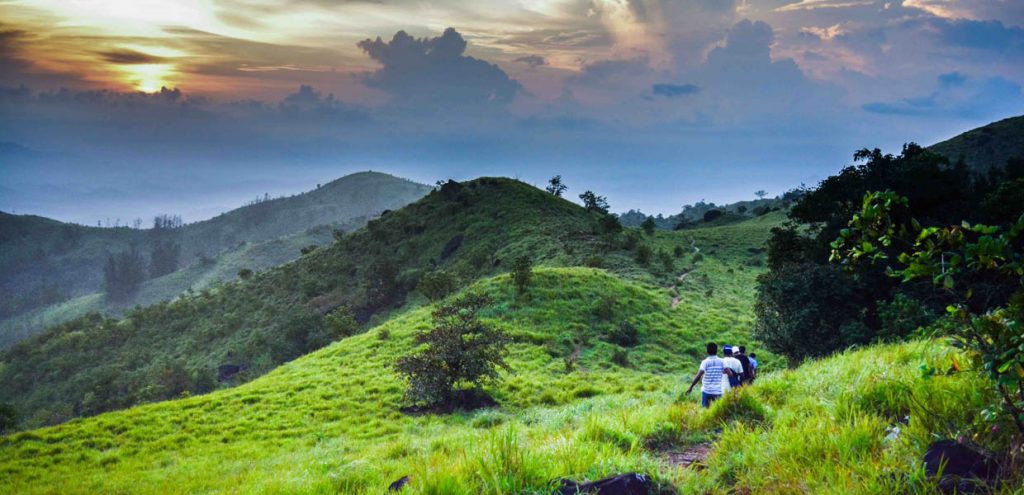
When people think Indian treks, they immediately think Himalayas. But Karnataka’s Western Ghats provide unique experiences—lush rainforests, coffee plantations, rocky peaks, and monsoon magic that transforms the landscape.
Why Trek in Karnataka?
Accessibility: Most Karnataka treks are closer to major cities like Bangalore and Mysore. You can do weekend treks without taking long leaves from work.
Year-Round Trekking: While Himalayan treks have limited seasons, Karnataka offers options throughout the year.
Unique Biodiversity: The Western Ghats are biodiversity hotspots. You’ll see endemic species found nowhere else in the world.
Cultural Experiences: Many Karnataka treks pass through tribal villages and ancient temples, adding cultural depth to your adventure.
Monsoon Trekking: Karnataka’s monsoon treks are spectacular. The Western Ghats come alive with waterfalls, mist, and vibrant greenery.
Top Adventure Treks in Karnataka
Beyond Kumara Parvatha, Karnataka offers numerous adventure treks:
Kudremukh Trek: Walk through Shola forests and grasslands to a peak shaped like a horse’s face. The trail offers stream crossings and incredible monsoon landscapes.
Kodachadri Trek: A spiritual trek to a sacred peak with a temple and stunning sunset views. The trail passes through Mookambika Wildlife Sanctuary.
Tadiandamol Trek: Coorg’s highest peak offers relatively easy climbing through coffee estates and forests. The summit provides 360-degree views of the Coorg district.
Mullayanagiri Trek: Karnataka’s highest peak at 1,930 meters. The drive itself is scenic, and the final climb offers excellent views of the Western Ghats.
Savandurga Trek: One of Asia’s largest monolith hills near Bangalore. It’s a challenging rock climb that tests your endurance and balance.
How to Choose the Right Trek for You
Here’s a simple framework to make your decision:
Assess Your Current Fitness
Be honest with yourself. Can you:
- Walk 5 km without getting exhausted?
- Climb 5 floors of stairs comfortably?
- Carry a 10 kg backpack for an hour?
If you answered no to most of these, start with easy treks and build up.
Consider Your Experience
- Zero treks completed: Start with easy treks
- 1-3 easy treks completed: Try moderate treks
- Multiple moderate treks completed: Consider difficult treks
Don’t skip levels. Each difficulty teaches you essential skills for the next.
Match Your Available Time
- Weekend (2-3 days): Easy treks only
- One week (5-8 days): Moderate treks
- 10+ days: Difficult expeditions
Factor in the Season
Different treks shine in different seasons:
- Summer (April-June): High altitude Himalayan treks, Karnataka treks
- Monsoon (July-September): Western Ghats treks (for experienced trekkers)
- Autumn (October-November): Best season for most moderate treks
- Winter (December-March): Snow treks, Rajasthan/Gujarat treks
Understand Altitude Acclimatization
If you’ve never been above 3,000 meters:
- Start with treks under 3,500 meters
- Give your body at least 6 months before attempting 4,000+ meter treks
- Learn to recognize altitude sickness symptoms
Let Plan the Unplanned handle your next adventure – reserve your spot, or discover more treks from Bangalore and Delhi Location
Explore Treks from Delhi Explore International Trips Explore Treks from Bangalore