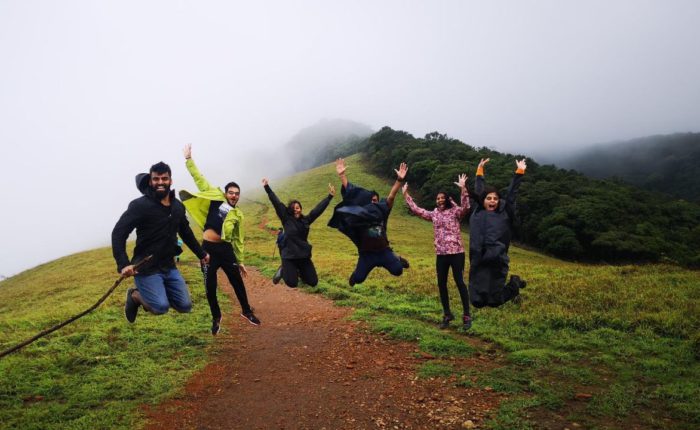
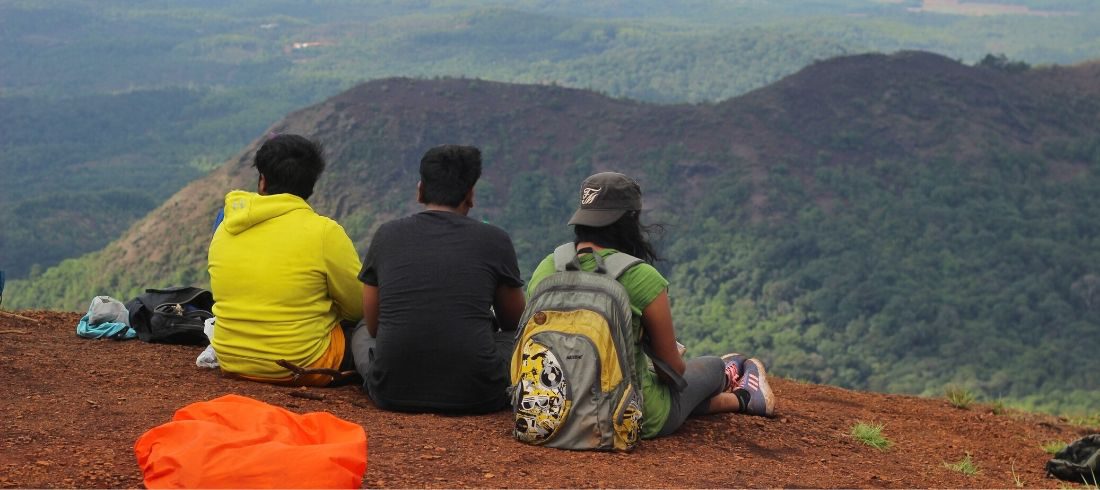
Picture this: You’re standing atop a misty peak at 1,343 meters, watching the sun paint the Arabian Sea in hues of orange and gold.
The cool mountain breeze carries whispers of ancient forests below, and you realize you’ve just conquered one of Karnataka’s most spectacular treks. This was my reality when Tarun from Plan the Unplanned called me up one Wednesday afternoon, inviting me to join their Kodachadri trek that coming weekend.
“Trust me,” he said with infectious enthusiasm, “this will be unlike anything you’ve done before.”
He wasn’t wrong. What followed was a journey that would etch itself into my memory forever, a perfect blend of adventure, natural beauty, and spiritual serenity that only the Western Ghats can offer.
When I got a call from Tarun from Plan the Unplanned, inviting me to be a part of their Kodachadri trek the following weekend, I never imagined it would turn out to be one of my most memorable weekend trips to date.
Nestled deep in the Western Ghats in the district of Shimoga and holding its place as the tenth highest peak in the State, Kodachadri hill is home to lush green jungle trails through dense tropical forests, picturesque waterfalls, and mesmerizing landscapes.
Located in the Mookambika Wildlife Sanctuary, it also forms the perfect backdrop to the Moola Mookambika Temple, believed to be the place of origin of Goddess Mookambika.
Catching a glimpse of the evening sunset into the Arabian Sea from its peak offers an enchanting experience; a combination of mountain and ocean, that very few peaks in the country can boast of.
Kodachadri Trek At A Glance
Location: Near Kollur, Shimoga District, Karnataka
Kodachadri Trek Distance: 14 km approx (via Hidlumane Falls)
Trail Type: Dense Tropical Rainforests, waterfalls, meadows, and cliffs
Trek Duration: 1 Day
Kodachadri Peak Altitude: 1,343 meters above sea level
Difficulty: Moderate (No prior experience required)
The Trail
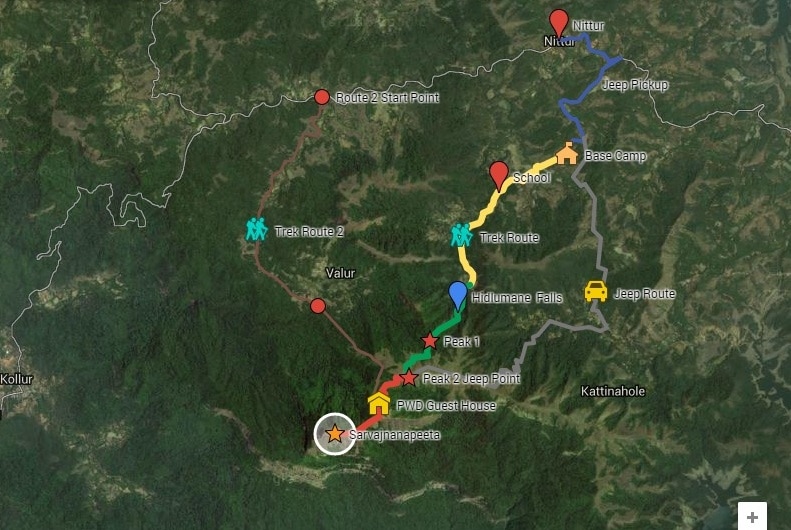
The various trek routes to Kodachadri Peak
There are mainly three trails to the peak apart from several other less explored ones. The most popular, as well as the most challenging, is the one via Hidlumane Falls starting from either Sampekatte or Marakuttaka.
This trail is relatively steep and rugged and requires you to make your way through thick forests, gentle streams, and quite literally climb a waterfall which becomes a whole another ballgame during peak monsoons.
Despite the efforts, the journey to the top is one you’ll remember and be proud of as you’re transported to another world, with magical sights, untouched forests and challenging climbs at every corner.
The other relatively easier trail is the one from Karakatte via Santhosh Hotel, Valur (Trek Route 2 in the image above). Private vehicles can easily come up till the tiny settlement housing the hotel and one can begin their trek from here which takes around 4-5 hours to reach the peak.
The third trail is actually a jeep track and is the longest of the three and is one which you’ll be taking on your descent from Kodachadri if you happen to opt for a Kodachadri jeep ride.
All three trails eventually culminate at the Moola Mukambika temple which also houses a PWD guest house and a couple of homestays that serve as an important landmark on your way to the peak. From here the peak is around 2 kms.
Kodachadri Trek (via Hidlumane Falls)
Understanding the Kodachadri Trek Distance
The trail via Hidlumane Falls is the one that the team from Plan the Unplanned including myself followed on our way to Kodachadri in May 2018 and as such I will be focusing on the same.
As aptly explained by our trek lead, Jatin who also happens to be one of the founders of PTU, there are mainly five milestones that one needs to look out for on this trail.
The first is an open field of meadow that pops up out of nowhere amidst thick forest sections. Numerous paddy fields later, the trail ultimately leads up to a house where a small surprise awaits for the tired trekkers. Spoiler alert, the challenging part of the trek actually starts from here.
The second is the much-awaited Hidlumane waterfalls which is a combination of seven waterfalls and making your way up each of them is an adventure on its own. However, your efforts are duly rewarded with spectacular views of the main waterfall cascading down on you from a height of around 60 feet.
The feeling of pristine water gushing over your tired bodies was therapy, to say the least. Do refill your water bottles here as you’re going to need it for the trek ahead.
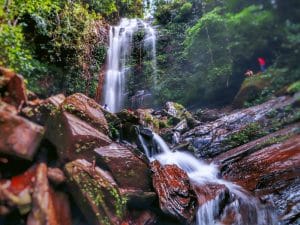
An almost vertical climb on the front face of the trail over tree roots and slippery rocks from the Kodachadri waterfalls leads to steeper meadows that eventually end up on the top of the very first peak on this trail.
This forms the third milestone and is a good place to rest and have some much-deserved lunch.
Further, the trail diverges only to merge again until it joins the jeep track that leads up to the Kodachadri Temple. This is your fourth milestone and is also the point from where you’ll be hiring a jeep on your way down.
From here, a rocky trail through a cliff’s edge ultimately leads you to the fifth and final milestone of the trek which is the Kodachadri peak itself. Here you will find the Sarvajna Peetha, a small temple-like structure made of stone where Adi Sankaracharya, an 8th-century Indian philosopher and theologian is said to have mediated.
Apart from this, grand vistas all around and the view of the sunset over the Arabian Sea scattering a myriad of hues all across the vast evening sky make all your efforts worthwhile and fill you with a sense of achievement that no corporate targets or performance bonuses can offer.
Best Season to Visit
When is the Best Time to Visit Kodachadri Hills?
The Kodachadri trek can be done all year round and each season has its own charm. However, the monsoon or the post-monsoon season is more preferred as the landscapes here truly come alive with lush greenery.
However, heavy rains and the unpredictable Kodachadri weather can make crossing the waterfalls much more challenging and trekking here becomes relatively more difficult.
Winter months (December to February) offer pleasant weather and clear skies, ideal for enjoying panoramic views from the peak.
Quick Guide:
- Best Overall: September to February (Post-monsoon)
- For Waterfalls: June to September (Monsoon, but more challenging)
- For Clear Views: December to February (Winter)
- To Avoid: Peak summer (March to May) can be hot and humid
How to Reach
Kodachadri is located on the Shimoga-Kollur highway with Kollur being the closest (20 kms) which is connected to major cities such as Bangalore, Chennai and Mumbai by bus.
The distance to Kodachadri from Bangalore is around 400 kms via road and the ideal route would be Bangalore – Tumkur – Tiptur – Arsikere – Tarikere – Shimoga – Hosanagara – Nittur. And from Kerala; Mangalore – Udupi – Baindur – Kollur – Nittur.
The nearest railroad is at Kundapura located at around 50 kms from Kollur and the nearest airport at Mangalore which is around 150 kms from the same.
For those relying on public transport, KSRTC buses are available from Bangalore to Kollur. From Kollur, you can hire a private vehicle or take a local bus to reach the base of the Kodachadri trek.
Sampekatte to Kodachadri Route
Complete Guide for Sampekatte to Kodachadri Trek
The Sampekatte to Kodachadri distance is approximately 10-12 kilometers via the Hidlumane Falls route, and this is considered one of the most scenic yet challenging paths to the summit. Here’s what makes this route special:
Starting Point: Sampekatte serves as an excellent base for trekkers, with several homestays available in the vicinity. From here, you’ll begin your journey through rural landscapes dotted with paddy fields.
Trek Sections:
- Sampekatte to Hidlumane Falls (5-6 km): This section takes you through dense tropical forests, small streams, and agricultural lands. The trail is moderately steep and can take 2-3 hours.
- Hidlumane Falls Section (1-2 km): Climbing through the seven-tier Hidlumane waterfalls is the highlight of this route. This section requires careful navigation, especially during monsoons.
- Hidlumane Falls to Peak (4-5 km): After the waterfalls, the trail opens up to grasslands and meadows before joining the jeep track that leads to the summit.
Pro Tips for Sampekatte Route:
- Start early (by 7:00 AM) to complete the trek before dark
- Carry extra pair of socks as the waterfall crossing will wet your shoes
- Local guides are available at Sampekatte (recommended for first-timers)
- The trek is best attempted in a group for safety
Food & Accommodation
The guys at PTU had arranged our stay at a homestay near Sampekatte which was a short drive away from the starting point of our trek.
This was as close to home as a homestay could get and the strictly authentic local vegetarian cuisine they served here was a delight to the senses and an experience in itself.
Add to that the extremely friendly old couple running the place, looking after your every need.
A handful of other homestays are available around the region. However, prior booking is a must for all of them.
If you wish to stay closer to the Kodachadri peak the only option is to book a room in advance at the PWD guest house near the Moola Mookambika Temple.
There are also a couple of homestays here that provide basic amenities. Camping at the Kodachadri peak, however, has been strictly prohibited by the Forest Department since January 2015.
Accommodation Options:
- Homestays near Sampekatte/Nittur: ₹800-1,500 per person (includes meals)
- PWD Guest House: ₹500-800 per room (advance booking required)
- Kollur Hotels: ₹1,000-3,000 per night
- Camping: Not allowed at peak; possible at PWD house area with permission (₹150 per person)
Packing List
One of the highlights of the trek to Kodachadri is that being a one day trek, you only need to carry the very essentials with you which is a blessing for the back and shoulders.
A small and sturdy 20-litre backpack, a couple of 1-litre water bottles, a rain jacket owing to the unpredictable Kodachadri weather, a cap for sun protection, some energy bars, a packed lunch and a basic first aid kit will do just fine.
A comfortable pair of trekking shoes having decent grip is an absolute must (Waterproofing, though not compulsory will have added benefits while crossing waterfalls or streams).
Trousers or track pants offer slightly better protection against those hungry leeches over shorts but those suckers will manage to find their way inside nevertheless. Trekking poles can be helpful, especially during steep descents and stream crossings.
Essential Packing Checklist:
Footwear & Clothing:
- Trekking shoes with good grip (waterproof preferred)
- 2-3 pairs of socks (cotton and synthetic mix)
- Quick-dry trousers/track pants
- Comfortable t-shirts (avoid cotton)
- Light jacket or fleece
- Rain jacket/poncho (mandatory)
- Cap/hat for sun protection
- Extra pair of clothes for post-trek
Trek Essentials:
- 20L backpack
- 2L water (refillable at Hidlumane Falls)
- Packed lunch and snacks
- Energy bars/dry fruits
- Basic first aid kit
- Personal medications
- Torch/headlamp with extra batteries
- Trekking poles (optional but helpful)
Personal Items:
- Sunscreen (SPF 30+)
- Insect repellent
- Personal hygiene items
- Small towel
- Plastic bags for wet clothes
- Cash (ATMs not available)
- Mobile phone with local SIM
- Power bank
Photography:
- Camera/smartphone
- Extra memory cards
- Waterproof pouch for electronics
Kodachadri Near Places: Extended Exploration Guide
If you have more time to explore the region, here are some excellent places near Kodachadri that are worth visiting:
Within 50 km:
Jog Falls (80 km): India’s second-highest plunge waterfall. Best visited during monsoon and post-monsoon when the Sharavathi River is in full flow.
Kundapur (50 km): A coastal town known for its beaches and temples. Great for extending your trip with some beach time.
Sringeri (90 km): Home to one of the four Advaita mathas established by Adi Shankaracharya.
Weekend Circuit Options:
Option 1 – Trekker’s Circuit:
- Day 1: Kodachadri Trek
- Day 2: Kudremukh Trek (100 km from Kodachadri)
Option 2 – Nature & Heritage:
- Day 1: Kodachadri Trek
- Day 2: Jog Falls → Nagara Fort → Linganamakki Dam
Option 3 – Spiritual Trail:
- Day 1: Kodachadri Trek
- Day 2: Kollur Temple → Sringeri → Hornadu
Conclusion
But these gentle forests and rolling hills still take care of every soul who set foot within their bounds, offering them plentiful shade and a place to rest every time it gets too hot or natural sources of water whenever it gets too tiring.
If only we humans could be this thoughtful. I urge you to travel responsibly when visiting places like these. Take back memories of a lifetime and leave only footprints.
I would like to applaud team Plan The Unplanned in this regard for their own green trails initiative of collecting and disposing of trash around the Kodachadri trail and strictly implementing the ‘Do Not Trash Your Travel’ policy all throughout the trek.
Small steps like these go a long way in ensuring these natural beauties stay around a lot longer. And before you go on to blame the government or the mindless tourists, remember, change always starts with you.
Ready to Experience Kodachadri?
If this guide has inspired you to trek Kodachadri, don’t wait! The Western Ghats are calling, and trust me, this is one adventure you don’t want to miss. Whether you’re coming from Bangalore, Davanagere, or anywhere in Karnataka, Kodachadri promises an experience that combines physical challenge, natural beauty, and spiritual tranquility in perfect harmony.
Book your Kodachadri adventure today! Connect with responsible trekking organizations like Plan The Unplanned who prioritize both your safety and environmental conservation. Your mountain is waiting – are you ready to answer the call?
Share your Kodachadri experience: Have you trekked to Kodachadri? Share your stories, tips, and photos in
Kodachadri Travel FAQs
What is special in Kodachadri?
Kodachadri, located in the Western Ghats of Karnataka, is known for its stunning sunrise and sunset views, lush green forests, and spiritual significance. It is home to the Mookambika Temple and offers panoramic views of the Arabian Sea on clear days. The trail passes through dense jungles, waterfalls like Hidlumane Falls, and rich biodiversity, making it one of Karnataka’s most scenic treks.
What is the cost of a Jeep ride in Kodachadri?
The Jeep ride from Nittur or Sampekatte to Kodachadri peak costs around ₹3,000 to ₹3,500 per Jeep (for 6–7 people).
If you share the Jeep with others, it typically costs ₹500–₹600 per person (one way).
The ride is an adventurous off-road experience managed by the local Jeep association.
How much time is required for the Kodachadri trek?
The Kodachadri trek usually takes about 5 to 6 hours one way, depending on your fitness and pace.
-
Trek distance: Around 9–10 km from the base (Nittur side via Hidlumane Falls)
-
Total duration (up and down): Approximately 8–9 hours
Many trekkers prefer to trek up and take the Jeep down to save time and energy.
Which month is best for trekking Kodachadri?
The best time to trek Kodachadri is from October to February when the weather is pleasant and visibility is clear.
-
Post-monsoon (October–December): Lush greenery and waterfalls at their best
-
Winter (January–February): Clear skies and comfortable temperatures
Avoid heavy monsoon months (June–August) due to slippery trails and leeches.
Does Kodachadri Trek have leeches?
Yes, leeches are common during the monsoon and post-monsoon months (June–September), especially in the forest section near Hidlumane Falls.
To prevent leech bites:
-
Apply Dettol, salt, or eucalyptus oil on your legs
-
Wear full socks and tuck your trek pants in
Is Kodachadri Trek safe now?
Yes, the Kodachadri trek is safe for both solo and group trekkers. The route is well-marked, and local guides are available.
However:
-
Avoid trekking during heavy rain or at night
-
Carry enough water, snacks, and a rain jacket
-
Follow forest department rules and local regulations
Let Plan the Unplanned handle your next adventure – reserve your spot, see what trekkers say, or discover more treks
Book Your Slot:Kodachadri Peak Trek
Explore Treks from Bangalore Explore Treks from Delhi