Picture this: You’re standing atop a giant boulder, watching the sun paint the ruins of a 500-year-old empire in shades of gold and crimson. Below you, massive stone temples dot the landscape like forgotten chess pieces, and the Tungabhadra River snakes through the terrain like a silver ribbon.
This isn’t a scene from a movie. This is Hampi.
Two months ago, I was sitting in my office in Bengaluru, staring at my laptop screen, feeling utterly disconnected from everything. A colleague casually mentioned she was planning a weekend trip to Hampi, and something clicked. “Wait,” I thought, “is there trekking in Hampi? I thought it was just temples and ruins.”
That weekend changed everything. And if you’re reading this, chances are you’re exactly where I was—curious, slightly skeptical, and wondering if Hampi is worth the hype beyond its Instagram-famous stone chariot.
Let me tell you: Hampi is not just another temple town. It’s a trekker’s paradise disguised as a UNESCO World Heritage Site.

Wait, Is There Any Trekking in Hampi?
This is probably the first question that pops into your head. And trust me, I had the same doubt.
Yes, absolutely! Hampi offers multiple trekking routes ranging from easy climbs to moderate adventures that combine history, nature, and adventure in ways you never imagined. Hampi is not only known for its historical ruins but also for its mesmerizing trekking trails nestled amidst the rocky terrains and lush greenery.
What makes Hampi’s trekking unique is the blend of experiences. You’re not just hiking up mountains—you’re walking through 500 years of history. These trails traverse through lush environment, archaic cave shelters and zigzag paths, offering views of Hampi’s architectural splendour as well as the wilderness that surrounds it.
Think of it as time-traveling on foot, where every boulder has a story and every temple whispers secrets from the Vijayanagara Empire.
Why is Hampi Called the “Lost City”?
Before we dive into the trails, let’s talk about what makes this place so special.
Around 1500 AD, Hampi was the capital of the Vijayanagar Empire and, according to some accounts, the second-biggest city in the world. Can you imagine? The city we now explore as ruins was once larger than Rome, bustling with traders from Persia, Portugal, and across Asia.
Hampi succumbed to the attacks by five Deccan Sultans in 1565 and they looted it for a long period, approximately six months. After the fall, the city was gradually abandoned, swallowed by time and nature, earning it the haunting nickname “the Lost City.”
Hampi’s history, ruins and temples made it an early site for offbeat tourism in the 1960s and after, with tourists gathering on its hills and midst its ruins, leading to it being called “Hampi Hippies” and Hampi as the “lost city” in some publications.
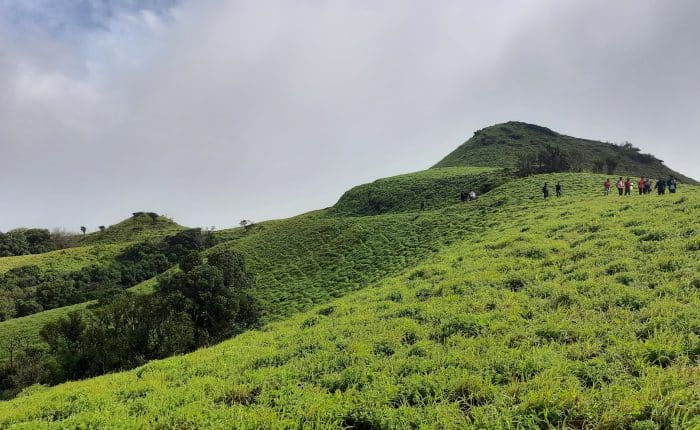
But here’s what struck me most: The terrain surrounding Hampi is as mysterious as the ruins themselves—the town is surrounded by boulders of various sizes, and you can reach the top of them with little effort to get a breathtaking view of the city and the geography.
The Mystery of Hampi: More Than Meets the Eye
Every time someone asks me, “What is the mystery of Hampi?” I smile. Because there isn’t just one mystery—there are hundreds.
The most famous? One of the unique features of Hampi’s Vitthala Temple are its elaborately carved musical pillars, which are said to produce the sounds of 81 different musical instruments when tapped with a wooden stick. Scientists and historians have been fascinated by this acoustic phenomenon for centuries.

But here’s another layer: Hampi isn’t just history—it’s mythology brought to life. It is believed that Hampi was the kingdom of Kishkindha before the Vijayanagara Empire, where Rama and Lakshmana stayed when they set out in search of Sita who was abducted by Ravana. According to legend, Anjaneya Hills was the birthplace of Hanuman, the faithful devotee of Lord Rama.
Walking these trails, you’re literally treading the paths mentioned in ancient epics. How’s that for a trekking experience?
Popular Treks and Trails in Hampi
Alright, let’s get to the good stuff. Here are the must-do treks in Hampi, broken down by difficulty, experience, and what makes each special.
1. Matanga Hill Trek: The Crown Jewel
Difficulty Level: Moderate
Distance: 2 km round trip
Duration: 1-1.5 hours
Best Time: Early morning for sunrise or late afternoon for sunset
Matanga Hill is one of the most popular trekking spots in Hampi, with the trail starting from Hampi Bazaar and passing through the Achyutaraya Temple. The climb is steady with some steep sections, but the panoramic view at the top, especially during sunrise or sunset, makes it worthwhile.
What to Expect:
This is THE classic Hampi trek. I did this on my first morning there, starting around 5:30 AM. The initial path winds through the Achyutaraya Temple complex, and as you climb, the ruins below start revealing themselves like a 3D map coming to life.
The final 20 minutes are the toughest—steep rock faces that require you to use your hands occasionally. But when you reach the top? Pure magic. You’re standing at the highest point in Hampi, with 360-degree views of the entire ruins, the Tungabhadra River snaking through the landscape, and massive boulder formations stretching as far as you can see.
Pro Tips:
- Start early (before 6 AM) to avoid crowds and catch the golden hour
- Wear shoes with good grip—the rocks can be slippery
- Carry water, but travel light
- The descent can be tricky on your knees, so use trekking poles if you have them
2. Hemakuta Hill Trek: The Easy Introduction
Difficulty Level: Easy
Distance: Short ascent, approximately 500 meters
Duration: 30-45 minutes
Best Time: Evening for sunset
Hemakuta Hill is an easy trek that offers magnificent views of Hampi’s landscape, with the hill dotted with small temples and pavilions, making it a perfect spot for photography and relaxation.
What to Expect:
Think of this as Hampi’s gentle introduction to trekking. Hemakuta Hill has numerous mythological tales with ancient temples as well as boulders that provide a perfect place for tackling adventures on trekkings. On your way up from Virupaksha Temple, you’ll explore groupings of temples, arches, and pavilions covering the slopes of the hill.
This is perfect if you’re traveling with family, including kids or elderly members. The trail is well-marked, mostly consists of stone steps, and you can take breaks at multiple temple pavilions along the way.
The sunset view from the top is legendary. You’ll find yourself surrounded by fellow travelers, all sitting in peaceful silence as the sun sets behind the ruins, casting long shadows across the boulder-strewn landscape.
Pro Tips:
- This gets crowded during sunset, so arrive 30 minutes early to secure a good spot
- Perfect for photography enthusiasts—the temples in the foreground with ruins in the background create stunning compositions
- Many small temples to explore, so allow extra time
3. Anjanadri Hill (Anjaneya Hill) Trek: The Spiritual Climb
Difficulty Level: Moderate
Distance: 1 km ascent
Duration: 1-1.5 hours
Climbing: Approximately 575 steps
Anjanadri Hill, believed to be the birthplace of Lord Hanuman, involves climbing around 575 steps with the climb being moderate and offering an enchanting view of the Tungabhadra River and the surrounding landscape.
What to Expect:
This trek is as much about spirituality as it is about fitness. The climb involves 575 uneven stone steps that wind up the hillside. It’s challenging, especially in the afternoon heat, but the spiritual atmosphere keeps you going.
At the top sits a small temple dedicated to Hanuman, and the view? Absolutely worth every step. You can see the Tungabhadra River flowing below, the ruins of Hampi spread across the opposite bank, and the endless boulder formations creating a surreal landscape.
What Makes It Special:
The connection to Ramayana makes this more than just a trek. Devotees believe this is where Hanuman was born, and you can feel the reverence in the air. Many pilgrims make this climb as part of their spiritual journey.
Pro Tips:
- Start early morning (before 7 AM) to avoid the heat
- The steps are uneven, so watch your footing
- Carry enough water—there are no shops on the way up
- Dress modestly as it’s a religious site
- The descent is easier but can be hard on the knees
4. Sanapur Lake Trek: The Water Lover’s Paradise
Difficulty Level: Easy to Moderate
Distance: Varies (2-4 km depending on route)
Best For: Nature lovers, photographers, adventure seekers
Sanapur Lake area offers multiple trails for trekking enthusiasts, with trails ranging from easy walks around the lake to more challenging routes that involve bouldering. This picturesque lake offers a scenic walk along its calm banks where you can go kayaking, swimming, cliff jumping, or just sit back amidst nature’s serenity.
What to Expect:
This is where adventure meets relaxation. The lake is about 5 km from main Hampi, surrounded by massive boulders that create a natural amphitheater. The trek around the lake is relatively easy, walking on boulder-strewn paths with the blue-green water always in view.
What makes this special is the activities. After your trek, you can:
- Take a coracle ride on the lake (more on this later!)
- Try cliff jumping (if you’re adventurous)
- Go for a swim in the cool waters
- Simply find a boulder and watch the sunset
Pro Tips:
- Rent a bicycle or moped to reach Sanapur Lake from Hampi Bazaar
- Carry swimwear if you plan to swim
- The lake is less crowded than main Hampi—perfect for peaceful moments
- Great spot for bouldering if you’re into rock climbing
5. Malyavanta Hill Trek: The Hidden Gem
Difficulty Level: Moderate
Best For: Solitude seekers, photographers, history buffs
Hidden away midst creepers infiltrating woods together with huge rock outcrops is where Malyavanta Hill attracts explorers who are looking for peace and silence. This trail is less traveled, making it perfect if you want to escape the crowds.
What to Expect:
This trek takes you through dense vegetation, ancient cave shelters, and zigzag paths. At the summit, you’ll find the Malyavanta Raghunathaswamy Temple. The trail is not as well-marked as others, which adds to the adventure but also means you should consider hiring a local guide.
The real magic here is the solitude. While Matanga Hill might have 50 people at sunrise, you might be one of three on Malyavanta. It’s raw, untamed, and feels like discovering something few have experienced.
6. Kodandarama Temple Trek: The Mythological Journey
Difficulty Level: Easy
Distance: Approximately 3 km from Hampi Bazaar
Best For: Cultural explorers, mythology enthusiasts
The Kodandarama Temple trek takes you on a journey through history and mythology, starting at Hampi Bazaar and leading through ancient ruins of rustic hamlets and fertile paddy fields.
What to Expect:
This is less of a mountain trek and more of a cultural walking journey. You’ll walk through active farmlands, pass rustic village settlements, and encounter temples that are still in worship. The Kodandarama Temple is dedicated to Rama, and the route passes by structures showing the architectural grandeur of the Vijayanagara period.
Perfect for an evening walk when the light is soft and farmers are finishing their day’s work. It’s one of the few treks where you experience living rural India alongside ancient history.
7. Hippie Island (Virupapur Gadde) Exploration
Difficulty Level: Easy
Access: Ferry ride across Tungabhadra River
Best For: Backpackers, bohemian vibes, alternative culture
To experience an alternative trek with hippy vibes, go to Hippie Island (Virupapur Gadde), accessible by crossing Tungabhadra River by ferry boat, with trails set amongst huge stones and wide banana plantations.
What to Expect:
Hippie Island is Hampi’s alter ego. While the main side is all about temples and history, Hippie Island is about chilled cafes, banana plantations, and a more relaxed vibe. The “treks” here are more like wandering paths through boulder fields and paddy fields.
This is where the backpacker crowd hangs out. The trails take you to isolated boulder formations perfect for bouldering, rice paddies that turn golden in harvest season, and hidden spots by the river.
Pro Tips:
- Take the coracle ferry from near Virupaksha Temple (₹20-50 per person)
- Combine with sunset watching from boulder tops
- Plenty of cafes for post-trek meals
- Rent a bicycle to explore the island
Tips for Trekking in Hampi: Everything You Need to Know
After doing all these treks (some multiple times), here are my hard-earned lessons and practical tips:
When to Climb in Hampi: Timing is Everything
Best Months to Visit Hampi:
October to February is the best time to visit Hampi for trekking due to the pleasant weather. Here’s the seasonal breakdown:
Winter (October to February) – PERFECT
- Temperature: 15-30°C
- Clear skies, comfortable climbing conditions
- Festival season (Hampi Utsav in November)
- Peak tourist season, so book accommodations in advance
Spring (March to May) – CHALLENGING
- Temperature: 25-40°C
- Hot and dry conditions
- Early morning treks only (start by 5:30 AM)
- Fewer tourists, better deals on stays
- Carry extra water and sun protection
Monsoon (June to September) – AVOID
- Heavy rains make trails slippery
- Leeches in forested areas
- Some trails closed for safety
- However, the landscape turns lush green if you don’t mind getting wet
Best Time of Day:
- Sunrise treks (5:30-8:00 AM): Best for Matanga Hill, Malyavanta Hill
- Evening treks (4:00-7:00 PM): Perfect for Hemakuta Hill, Sanapur Lake
- Avoid midday (11 AM-3 PM): Extreme heat, especially March-May
What Clothes to Wear in Hampi
This is crucial because Hampi is a mix of religious sites and adventure terrain.
For Trekking:
- Lightweight, moisture-wicking t-shirts (avoid cotton in summer)
- Comfortable trekking pants or shorts
- Comfortable trekking shoes with good grip as the trails can be rocky and uneven
- Hat or cap for sun protection
- Sunglasses
For Temple Visits:
- Modest clothing covering shoulders and knees
- Lightweight scarf or shawl (women)
- Comfortable walking sandals
- Socks (some temples require removing footwear)
Essential Accessories:
- Sunscreen, hat, and sunglasses to protect from the sun
- Refillable water bottle
- Small backpack
- Headlamp/torch for early morning starts
- Camera (you’ll thank me later)
Pro Tip: Dress in layers. Mornings can be cool (15°C), afternoons scorching (35°C), and evenings pleasant again. Also, keep a dupatta or sarong in your bag—many temples won’t allow entry in shorts.
Can We Visit Hampi at Night?
This is an important question, especially if you’re planning early morning treks.
Short answer: Partial yes, but with important limitations.
The main temple complex and ruins officially close around sunset (approximately 6:00-7:00 PM depending on season). However, Hampi doesn’t completely shut down at night.
What You CAN Do at Night:
- Stay in Hampi Bazaar area or Hippie Island (plenty of accommodations)
- Enjoy dinner at local restaurants (open until 10-11 PM)
- Walk around Hampi Bazaar area (but stay in well-lit, populated areas)
- Pre-position yourself for sunrise treks
- Stargaze from your guesthouse terrace
What You CANNOT/SHOULD NOT Do:
- Enter temple complexes after dark (they’re closed)
- Trek alone on hills at night (safety concern)
- Expect public transport after 8 PM (limited options)
- Visit isolated areas (safety and wildlife concerns)
For Sunrise Trekkers:
If you’re planning a sunrise trek to Matanga Hill, you’ll need to start around 5:30-6:00 AM. Many guesthouses in Hampi Bazaar are within walking distance of the trailhead, making this convenient.
Which Day is Hampi Closed?
Great news: Hampi is open all days of the week!
Unlike many tourist attractions that close one day per week for maintenance, Hampi’s monuments and trails are accessible every day, including weekends and public holidays.
However, keep these points in mind:
- Temple rituals: Active temples like Virupaksha Temple have specific puja timings (usually early morning and evening)
- Peak days: Weekends and national holidays see more domestic tourists
- Festival closures: During major festivals, some areas might have restricted access or be extremely crowded
- Monday factor: In India, many museums and archaeological sites close on Mondays, but Hampi’s outdoor ruins remain accessible
Best Days to Visit:
Weekdays (Tuesday-Thursday) are ideal for a quieter experience. Weekends can get crowded, especially from Saturday afternoon through Sunday.
Safety and Practical Trekking Tips
Hydration is Non-Negotiable
Carry sufficient water to stay hydrated, especially during the hotter months. I can’t stress this enough. There are limited water sources on trails. Carry at least 2 liters per person for longer treks.
Sun Protection
Use sunscreen, wear a hat, and carry sunglasses to protect yourself from the sun. The sun in Hampi is brutal, especially on exposed boulder faces. Reapply sunscreen every 2 hours.
Local Guides
Hiring a local guide can enhance your trekking experience by providing insights into the history and significance of various sites. This is especially valuable for treks like Malyavanta Hill where trails aren’t well-marked.
Cost: ₹500-800 for half-day, ₹1,000-1,500 for full day
Permits and Entry Fees
Some areas might require entry fees or permits, so check in advance. Major monuments like Vittala Temple and Royal Enclosure charge:
- Indians: ₹30-50
- Foreign Nationals: ₹500-600
The hills and boulder formations are generally free to access.
Solo Trekking Considerations
Hampi is generally safe for solo travelers, but:
- Inform your hotel about your trekking plans
- Carry a charged mobile phone
- Stick to popular trails if alone
- Avoid isolated areas after dark
- Join group tours if uncertain (many hostels organize group treks)
What to Pack for a Day Trek:
- Water (2 liters minimum)
- Energy snacks (dates, nuts, energy bars)
- Sunscreen and lip balm with SPF
- First-aid kit
- Mobile phone and power bank
- Camera
- Cash (ATMs are limited in Hampi)
- Light rain jacket (if visiting during transitional months)
What is the Cost of Hampi Tour?
Let’s talk money. Hampi is surprisingly affordable compared to other tourist destinations in India.
Accommodation Costs:
- Budget hostels/guesthouses: ₹300-700 per night (dorm) / ₹700-1,200 (private room)
- Mid-range hotels: ₹1,500-3,000 per night
- Boutique/resort stays: ₹3,500-6,000+ per night
Transportation:
- Bicycle rental: ₹100-200 per day (best way to explore!)
- Moped/scooter rental: ₹250-400 per day
- Auto-rickshaw for day: ₹700-1,200 (for full day of sightseeing)
Food:
- Breakfast: ₹80-150
- Lunch/Dinner: ₹150-300 per meal
- Street food/snacks: ₹30-80
Activities:
- Entry to monuments (Indian): ₹30-50 each
- Entry to monuments (Foreign): ₹500-600 each
- Coracle ride: ₹300-500 per person
- Local guide: ₹500-1,500 depending on duration
- Bouldering gear rental: ₹500-800
Sample Budget Breakdown (Per Person, Per Day):
Budget Traveler:
- Accommodation: ₹500 (hostel dorm)
- Food: ₹400 (3 meals)
- Transport: ₹150 (bicycle)
- Entry fees: ₹100
- Activities: ₹300
- Total: ₹1,450 (~$17-18 USD)
Mid-Range Traveler:
- Accommodation: ₹2,000 (decent hotel)
- Food: ₹800 (restaurants)
- Transport: ₹400 (scooter + auto)
- Entry fees: ₹150
- Activities: ₹500
- Total: ₹3,850 (~$45-50 USD)
For a Complete Hampi Trip (3 days/2 nights):
- Budget: ₹4,000-6,000 ($50-75)
- Mid-range: ₹10,000-15,000 ($125-180)
- Luxury: ₹20,000+ ($250+)
This excludes travel to/from Hampi but includes all on-site expenses.

How Much is the Coracle Ride in Hampi?
Ah, the famous coracle ride! This is one of Hampi’s signature experiences, and honestly, you haven’t truly experienced Hampi without floating in these circular basket boats.
What is a Coracle?
Coracles, also known as Dongis sometimes, are round boats traditionally used to ferry people and livestock across rivers, made of bamboo and plastic, used to take tourists (max 6-8 people at a time) across the Tungabhadra river.
Current Costs (2025):
As of 2025, coracle rides now cost ₹300-₹500, up from ₹200. Here’s the detailed breakdown:
30-Minute Ride:
- Cost: ₹300-400 per person
- Includes: Ride on Tungabhadra River
- Basic route: Around the immediate area
1-Hour Ride:
- Cost: ₹450-600 per person
- Includes: Extended ride with temple stops
- Route includes: Koti Linga, Laxmi Temple, Suryanarayan Temple visits
Private Coracle (Sanapur Lake):
- Cost: ₹500-600 per coracle (up to 5 people)
- Duration: 30-45 minutes
- Includes: Lake exploration, photo opportunities
Top Locations for Coracle Rides:
- Chakratirtha (near Virupaksha Temple)
- Most popular spot
- Easy access from Hampi Bazaar
- Can get crowded
- Hippie Island Ferry Point
- Used for river crossing and leisure rides
- Great river views
- More crowded during peak hours
- Sanapur Lake
- Less crowded, more peaceful
- Beautiful boulder surroundings
- About 5 km from main Hampi
- Best for longer, scenic rides
Pro Tips for Coracle Rides:
- Book the 1-hour ride if possible—the temple stops make it worth the extra cost
- Best timing: Early morning (7-9 AM) or late afternoon (4-6 PM)
- Bargaining is possible, especially for groups
- Life jackets provided (insist on wearing them!)
- Carry waterproof bag for your phone/camera
- Winter months (October-February) offer best experience
- Avoid during monsoon (July-August) when rides may be suspended
Getting to Hampi: Practical Information
By Air:
Nearest airports:
- Vidyanagar Airport (Torangallu): 32-45 km (recently became operational)
- Bellary: 60 km
- Hubli: 143 km
- Bangalore: 360 km (most common route)
From airports, hire taxis (₹800-1,500 depending on distance).
By Train:
Hospet Junction (13 km) links Bengaluru, Hyderabad, and Goa, with auto-rickshaws to Hampi costing ~₹200.
By Bus:
KSRTC buses from Bengaluru (340 km, 6-7 hrs), Hyderabad, or Goa drop you at Hospet. From Hospet, local buses or autos reach Hampi in 30 minutes.
By Road:
Take NH-4 from Bengaluru to Chitradurga, then NH-169 to Hospet—ideal for adventure lovers.
Where to Stay in Hampi
Hampi Bazaar Side:
- Closer to major monuments
- Better for temple exploration
- More established hotels and hostels
- Can be touristy
Hippie Island (Virupapur Gadde):
- Quieter, more relaxed vibe
- Backpacker-friendly
- Great cafes and sunset spots
- Need to take ferry to main monuments (last ferry around 6 PM)
Anegundi:
- Heritage village experience
- Homestays and boutique properties
- More authentic local experience
- Slightly farther from main ruins
A Sample 3-Day Hampi Trekking Itinerary
Day 1: Temple Side Exploration
- 5:30 AM: Sunrise trek to Matanga Hill
- 8:30 AM: Breakfast at Hampi Bazaar
- 10:00 AM: Explore Vittala Temple complex
- 12:30 PM: Lunch break
- 3:00 PM: Visit Royal Enclosure, Queen’s Bath
- 5:30 PM: Sunset from Hemakuta Hill
- 7:00 PM: Dinner at local restaurant
Day 2: Anegundi and Spiritual Trek
- 6:00 AM: Early start for Anjanadri Hill trek (575 steps)
- 9:00 AM: Explore Anegundi village
- 11:00 AM: Coracle ride on Tungabhadra (1-hour ride with temple stops)
- 1:00 PM: Lunch at Hippie Island
- 3:00 PM: Explore Hippie Island on bicycle
- 5:30 PM: Sunset from boulder formations
- 7:30 PM: Dinner at island cafe
Day 3: Offbeat and Relaxation
- 7:00 AM: Trek to Malyavanta Hill (less crowded)
- 10:00 AM: Breakfast
- 11:30 AM: Travel to Sanapur Lake
- 12:30 PM: Lake exploration, coracle ride, cliff jumping (if adventurous)
- 3:00 PM: Lunch at Sanapur
- 4:30 PM: Final visit to Virupaksha Temple
- 6:00 PM: Depart or stay for evening stroll
Rock Climbing and Bouldering in Hampi
Beyond trekking, Hampi offers ample scope for rock climbing enthusiasts, with the rocky terrain mostly scattered with boulders and granite crags of various sizes ranging from 4 m to 60 m in height, offering easy as well as challenging options for rock climbers.
Hampi has become internationally famous in the bouldering community. If you’re into rock climbing, Hippie Island has multiple boulder problems ranging from beginner V0 to advanced V10 levels.
Gear rental available at: Tom and Jerry’s, other climbing shops on Hippie Island (₹500-800 per day).
Final Thoughts: Why Hampi Should Be on Your Bucket List
Three months ago, I didn’t know trekking in Hampi was even a thing. Today, I’ve been back twice and I’m already planning my third visit.
What makes Hampi special isn’t just the treks or the temples or the coracle rides. It’s the combination of all of it. Where else can you:
- Trek to a summit mentioned in ancient epics
- Float in a 500-year-old traditional boat
- Watch sunrise over ruins that were once the world’s second-largest city
- Climb boulders that have witnessed empires rise and fall
- Connect with backpackers from across the world
- Experience village life that hasn’t changed in centuries
Hampi still retains more than 1600 monuments, including palaces, forts, memorial structures, temples, shrines, pillared halls, baths and gateways. Each one has a story. Each trek reveals a new perspective.
The boulder-strewn landscape creates a surreal, almost lunar terrain that photographers and adventurers dream about. The Tungabhadra River adds serenity. The temples remind you that this was once a thriving civilization. And the sunrises? They’re spiritual experiences whether you’re religious or not.
Hampi isn’t just a destination. It’s a feeling—an ancient empire that lives in every stone and sunset.
Quick Reference: Your Hampi Trekking FAQ
Is there any trekking in Hampi?
Yes! Multiple trails ranging from easy to moderate, combining history and adventure.
Which month is best to visit Hampi?
October to February for perfect weather. Avoid monsoon (July-August).
What clothes to wear in Hampi?
Comfortable trekking shoes, lightweight clothing, modest attire for temples (covering shoulders and knees).
When to climb in Hampi?
Early morning (5:30-8 AM) or evening (4-7 PM). Avoid midday heat (11 AM-3 PM).
Which day is Hampi closed?
Hampi is open all days of the week! No weekly closure.
Can we visit Hampi at night?
Limited. Monuments close at sunset, but you can stay overnight and position for sunrise treks.
Why is Hampi called Lost City?
After the 1565 attack by Deccan Sultans, this once-thriving capital was abandoned and forgotten for centuries.
What is the mystery of Hampi?
Musical pillars that produce 81 instrument sounds, mythological connections to Ramayana, and unexplained acoustic phenomena.
How much is the coracle ride in Hampi?
₹300-500 per person for 30-minute rides; ₹450-600 for 1-hour rides with temple stops.
What is the cost of Hampi tour?
Budget: ₹1,450/day per person; Mid-range: ₹3,850/day. Complete 3-day trip: ₹4,000-15,000 depending on comfort level.