
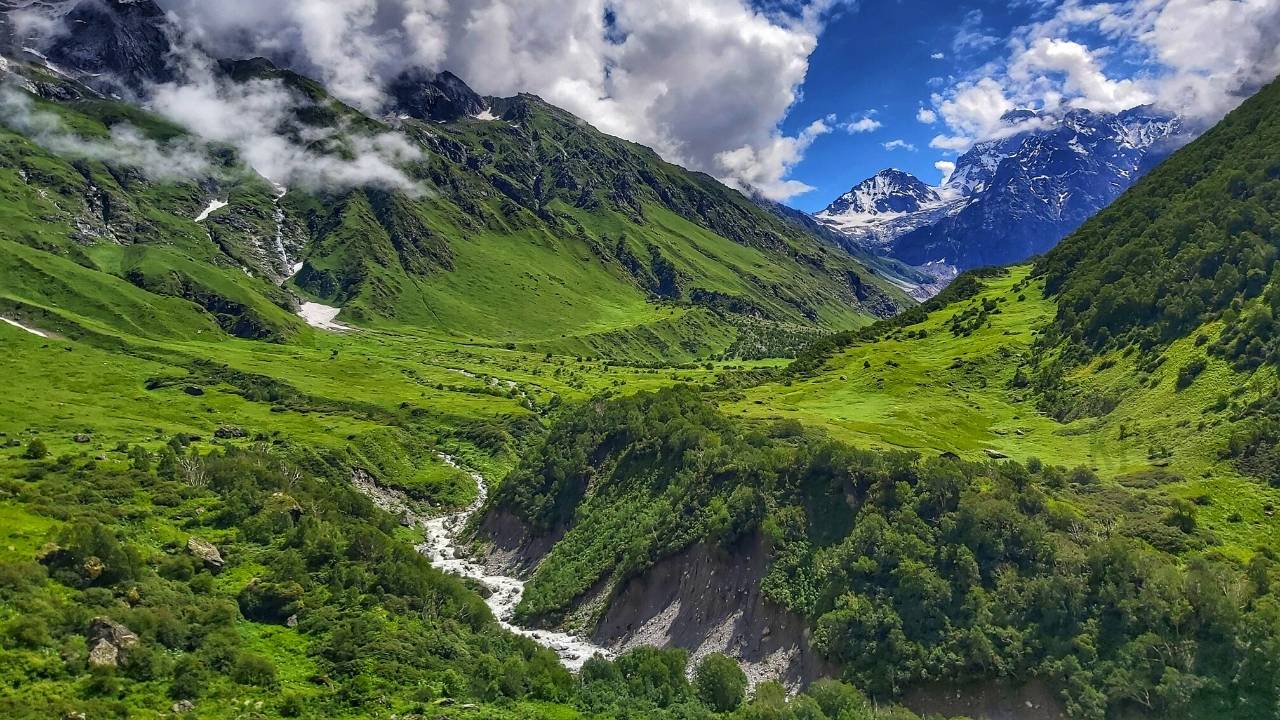
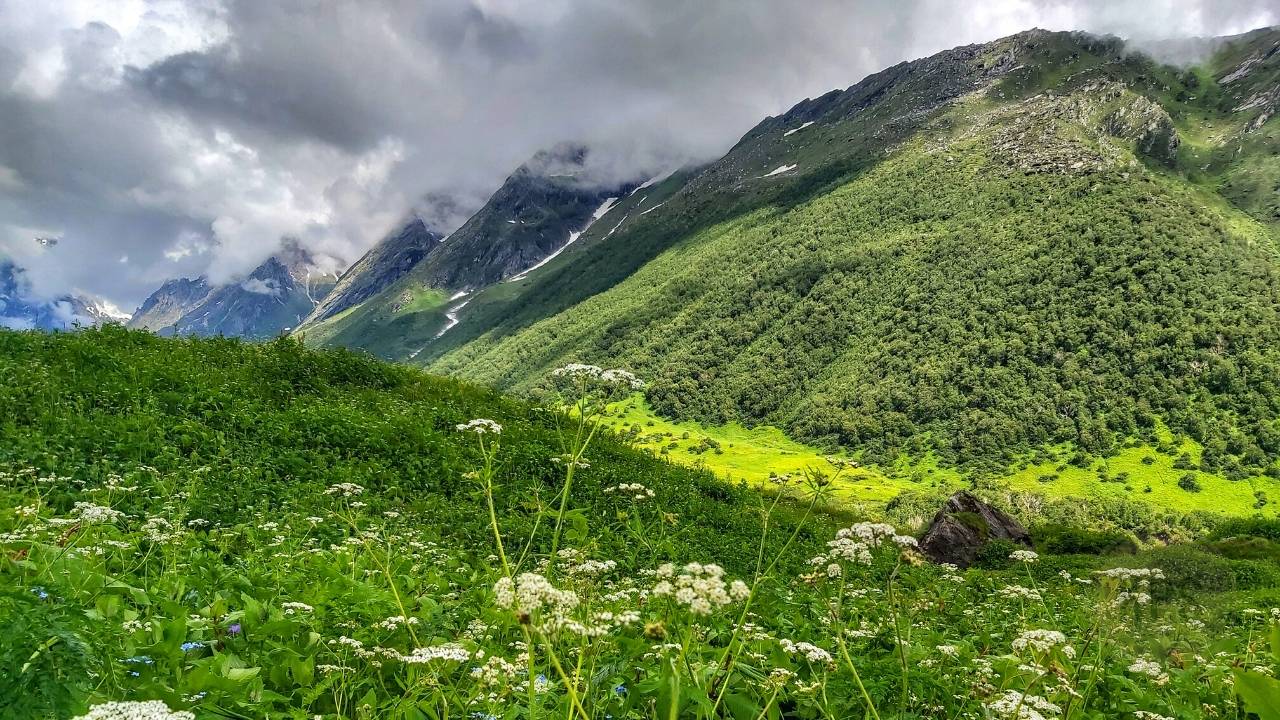
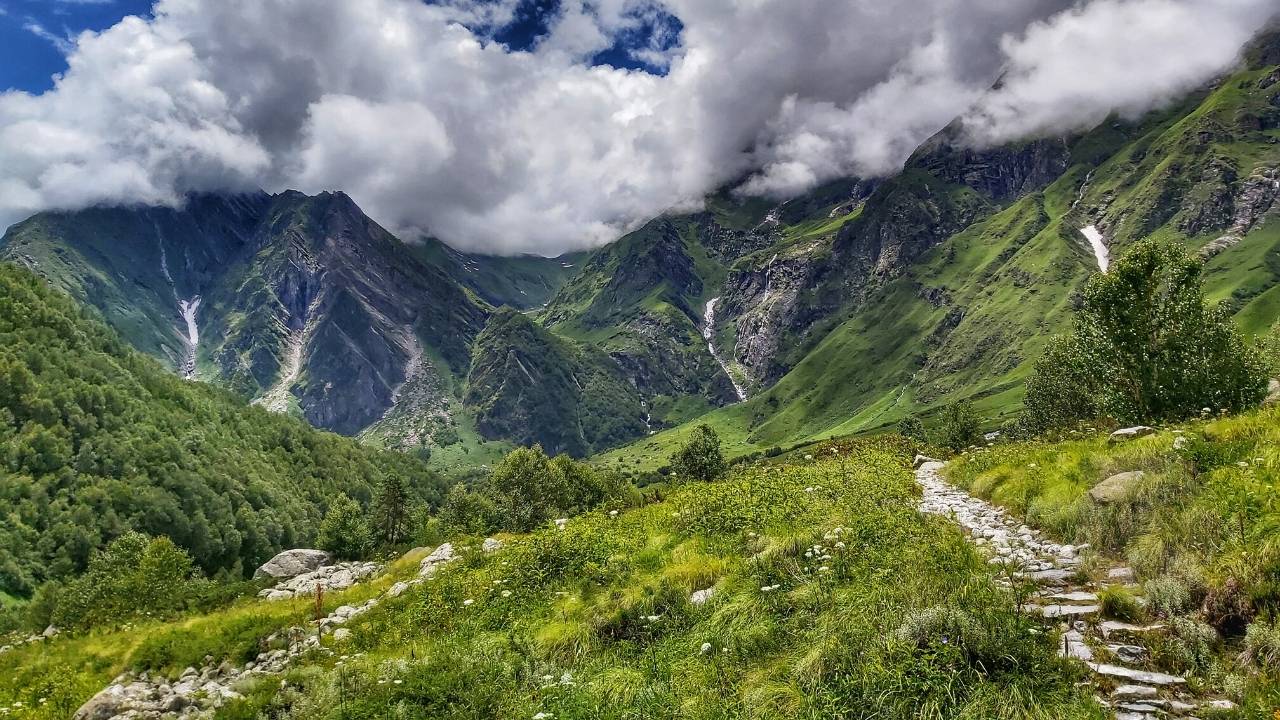
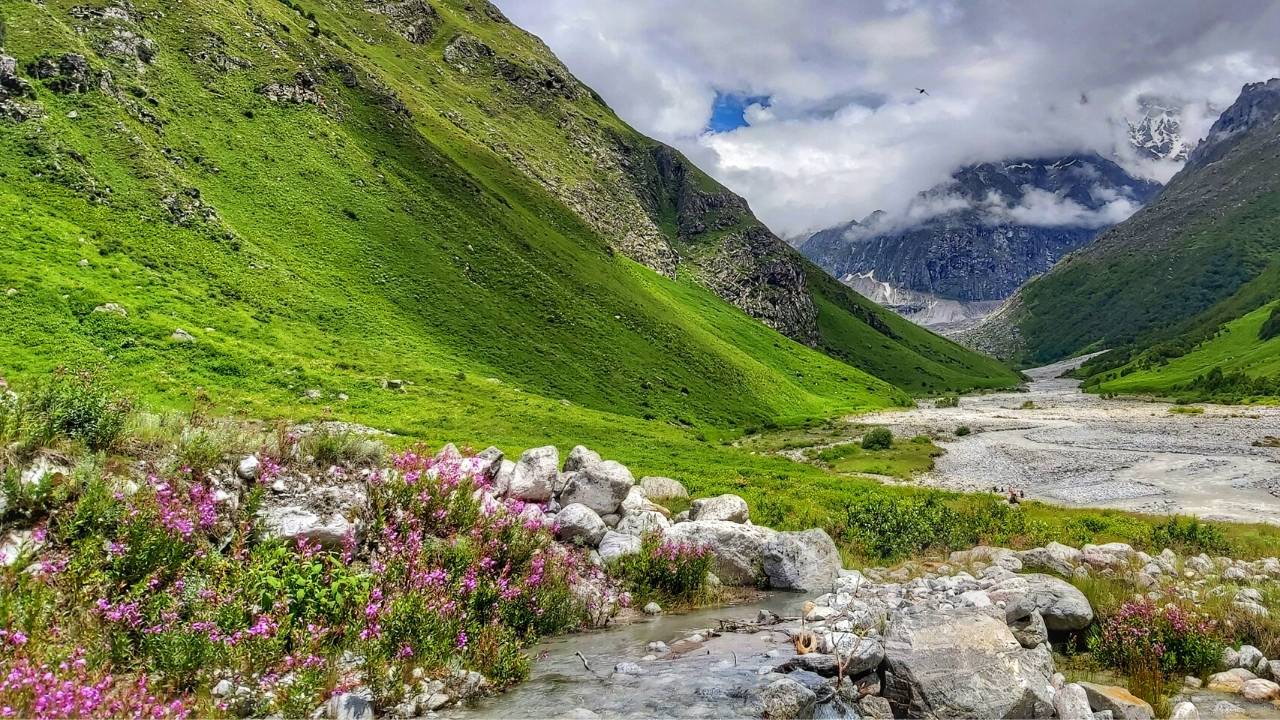
Valley of Flowers is a vibrant and splendid national park in the Himalayas. Nestled in Uttarakhand, this alluring place is famous for its charming meadows of alpine flowers. Endowed with a diverse range of endemic flora, it is picturesque in its beauty. This lush region is also home to some rare and endangered animal species. You may spot animals like Asiatic black deer, snow leopard, musk deer, red fox, brown bear, and blue sheep. High in the lofty Himalayas of the Garhwal region sprawls this enchanting valley. Legends believe it to be the place from where Hanuman had collected the Sanjeevani Booti for curing Lakshmana. This place has floral pastures, running streams and a beautiful backdrop of the mountains.
Note:
Day 1: Rishikesh to Joshimath (253 Kilometers, 8 Hours Drive)
Day 2: Joshimath to Pulna Drive (22 Kilometers) | Ghangaria Trek (09 Kilometers)
Day 3: Trek from Ghangaria to Valley of Flowers and back (08 Kilometers)
Day 4: Trek from Ghangaria to Hemkund Sahib Trek and back (16 Kilometers)
Day 5: Trek from Ghangaria to Pulna (09 Kilometers) | Drive Joshimath (22 Kilometers)
Day 6: Drive Back from Joshimath to Rishikesh (253 Kilometers, 08 Hours Drive)
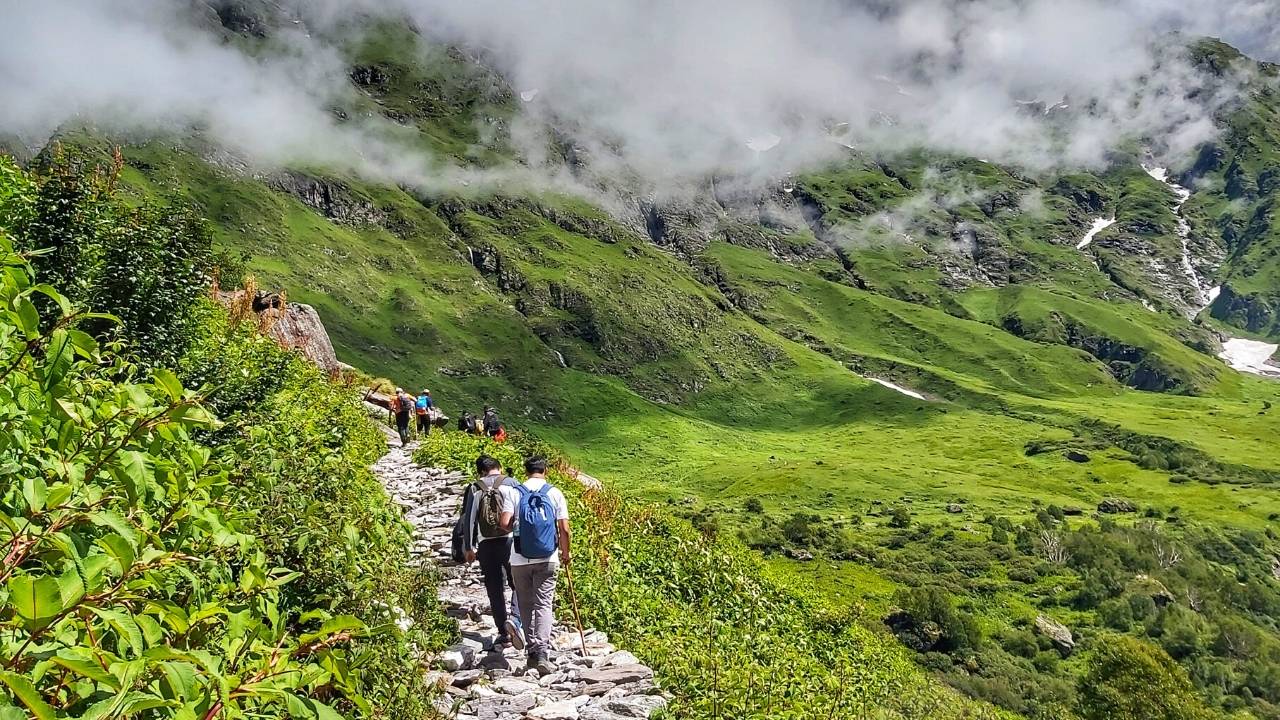
The Valley of Flowers Trekking Route is truly amazing, and it’s maybe the only Himalayan Trek with a plethora of resources and rest stations in the shape of dhabas and restaurants, a steady increase throughout a well-defined track, and the exception of a steep uphill route on the way to Hemkund Sahib.
The length of the hike has been drastically reduced due to the building of a road to the trailhead village of Pulna.
Getting to Ghangaria and Hemkund Sahib on a mule is possible from Govindghat, but they aren’t allowed in the main valley.
There is no chance to pitch a tent along the trail, although there are a few basic inns where you can spend the night. Camping is prohibited because of the nature of the trip and the significance of the wildlife that must be preserved. This implies that you won’t be able to sit still for very long, making it difficult for seasoned trekkers who might ordinarily enjoy a leisurely stroll down the valley.
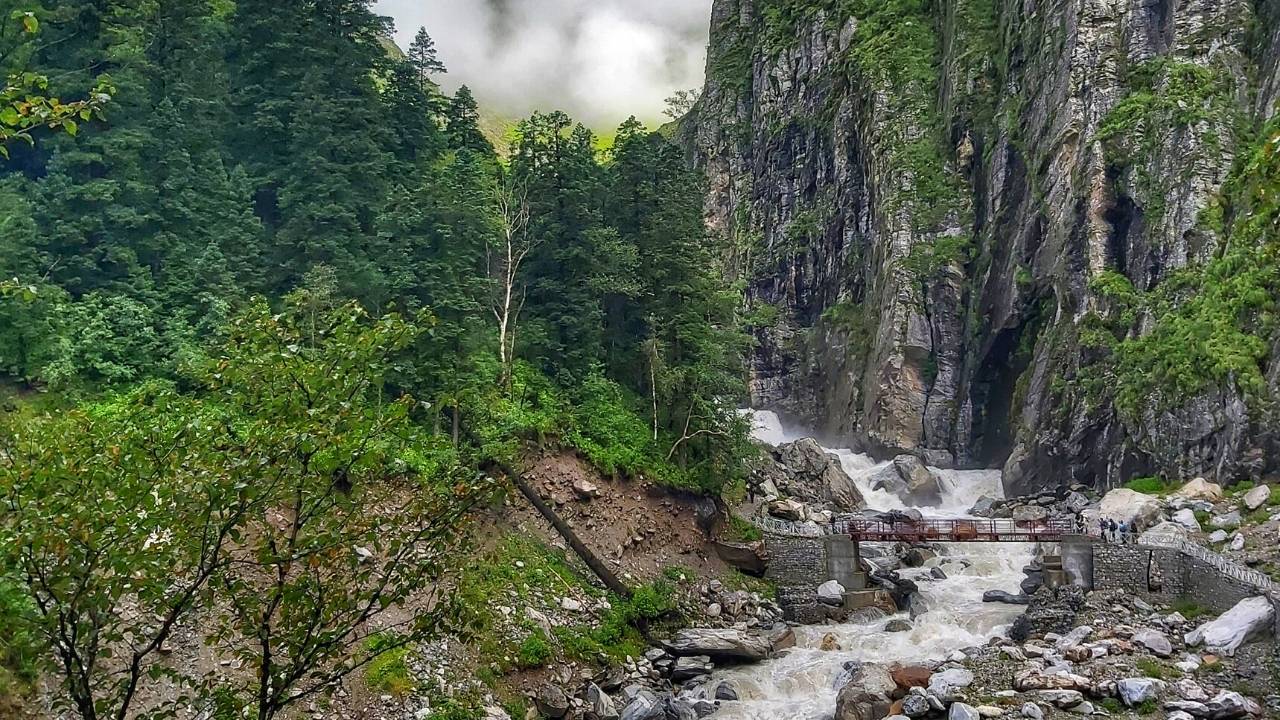
Hiking through the Valley of Flowers is a visual treat in and of itself, what with the dazzling waterfalls, glaciers, and verdant green canopies of the valley, as well as the inviting Hathi Parvath mountains as you make your way towards Ghangaria town.
In addition to being a beautiful and peaceful spot to hike, the Valley of Flowers is also a relatively safe destination due to the large number of pilgrims that pass through it each year.
The ascent from Ghangaria to Hemkund Sahib is the only big one; the other climbs are much less strenuous.
Hikers won’t have to worry about getting lost because the campsites are all dispersed over large distances and at different elevations.
You should plan your visit to the Valley of Flowers for the middle of July, when the flowers will be at their peak and the valley will be at its most beautiful.